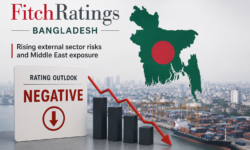
Executive Summary
The Bangladesh Bank monetary tightening market impact reflects a continued policy emphasis on inflation containment, liquidity discipline, and macroeconomic stability. The central bank’s stance signals a prioritisation of price control and foreign exchange stability amid ongoing pressures in the external sector and structural stress within the banking system. Tighter monetary conditions influence interest rate transmission, credit expansion, and liquidity availability across financial markets, with implications for banking sector balance sheets and capital market participation.
From a governance perspective, monetary tightening elevates the importance of supervisory oversight, asset quality monitoring, and capital adequacy within the financial system. While restrictive liquidity conditions may moderate speculative activity and support exchange rate management, they also shape market confidence through their effects on borrowing costs and financial intermediation. Overall, the policy approach underscores a preference for macroeconomic stability over short-term growth acceleration, reinforcing institutional credibility as a key variable in market interpretation.
Policy Direction Signals Continued Inflation Focus
Bangladesh Bank’s latest monetary policy update indicates a continued emphasis on inflation containment and liquidity discipline. The central bank has maintained a cautious stance amid persistent price pressures, external balance challenges, and banking sector stress.
The policy signals suggest that controlling inflation and stabilizing the foreign exchange market remain priority objectives. This approach reflects broader macroeconomic management goals rather than short-term growth acceleration.
Interest Rate and Liquidity Transmission
Monetary tightening or sustained higher policy rates typically influence the financial system through multiple channels:
- Higher lending rates across commercial banks
- Increased funding costs for corporate borrowers
- Slower private sector credit expansion
- Pressure on leveraged sectors
Liquidity management tools, including repo operations and reserve requirements, remain central to controlling excess money supply. Tight liquidity conditions can reduce speculative activity but may also limit investment momentum.
Impact on Banking Sector Stability
The banking system remains sensitive to policy tightening. Elevated interest rates can support deposit growth but may also increase non-performing loan risks if borrowers struggle under higher repayment burdens.
Asset quality trends, capital adequacy ratios, and provisioning levels will be key indicators to monitor in upcoming financial disclosures. Governance oversight within the banking sector remains critical to maintaining confidence during policy tightening cycles.
Capital Market Implications
The stock market is closely linked to liquidity conditions. When monetary policy tightens, surplus funds available for equity participation typically decline.
Potential market effects include:
- Reduced turnover in the Dhaka Stock Exchange
- Margin pressure on rate-sensitive sectors such as real estate and construction
- Valuation adjustments in highly leveraged companies
However, inflation control can support long-term macro stability, which may strengthen investor confidence over time if policy credibility remains intact.
External Sector Considerations
Monetary discipline also affects exchange rate stability. By managing liquidity and interest rate differentials, Bangladesh Bank aims to reduce pressure on foreign reserves and moderate currency volatility.
Improved external balance stability may enhance sovereign risk perception and support trade financing conditions.
Forward Outlook
The durability of this policy stance will depend on:
- Monthly inflation trends
- Private sector credit growth data
- Exchange rate movements
- Banking sector asset quality developments
A shift toward easing would likely require sustained inflation moderation and improved reserve conditions. Until then, the central bank appears positioned to prioritize macroeconomic stability over aggressive growth stimulus.
Sources
https://www.bb.org.bd/en/index.php/monetarypolicy
https://www.thedailystar.net/business/economy/news/bangladesh-bank-monetary-policy-update-
https://www.newagebd.net/article/bangladesh-bank-policy-decision-
Market Reactions and Interpretative Views
Institutional Lens
From an institutional perspective, the Bangladesh Bank monetary tightening market impact is interpreted primarily through the lens of policy credibility and systemic risk management. Financial institutions tend to assess tightening measures in relation to balance sheet resilience, funding cost adjustments, and asset quality sustainability. Elevated policy rates and disciplined liquidity conditions reinforce inflation control objectives, but they also heighten sensitivity around non-performing loans and capital adequacy. Institutional actors typically prioritise clarity in policy communication and consistency in implementation, viewing these factors as central to maintaining confidence during periods of macroeconomic adjustment and constrained liquidity.
Retail Perception Lens
Retail market participants often interpret the Bangladesh Bank monetary tightening market impact indirectly through changes in borrowing costs, deposit rates, and equity market activity. Higher interest rates may be perceived as limiting credit access and dampening short-term market participation, particularly in rate-sensitive sectors. Reduced liquidity in the capital market environment can influence turnover and valuation expectations. However, retail perception is also shaped by broader narratives around inflation control and currency stability, which can gradually influence confidence if policy discipline is sustained and macroeconomic conditions show signs of stabilisation.
Governance-Focused Perspective
From a governance standpoint, the Bangladesh Bank monetary tightening market impact underscores the importance of regulatory oversight, transparency, and institutional discipline within the financial system. Tightening cycles place increased emphasis on supervisory effectiveness, particularly in monitoring asset quality, provisioning standards, and risk concentration within banks. Policy restraint also interacts with governance frameworks related to foreign exchange management and reserve protection. Consistent enforcement and credible signaling are central to sustaining market trust, especially when tighter financial conditions expose structural vulnerabilities within the banking and capital market ecosystem.