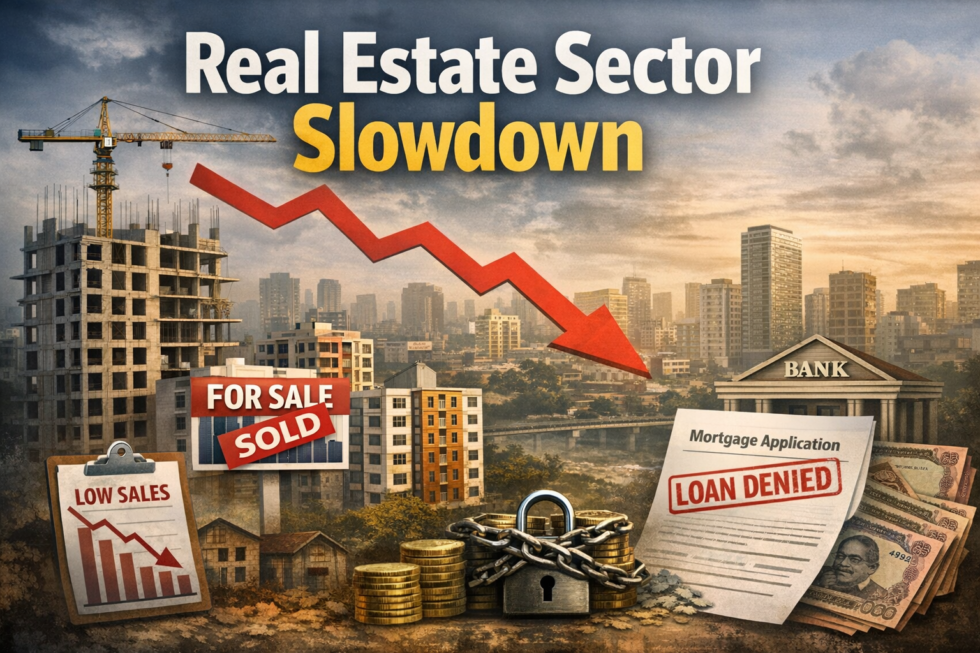
The Bangladesh real estate sector slowdown analysis evaluates the interaction between demand moderation, tighter credit conditions, and broader macro-financial pressures. Elevated mortgage rates, constrained bank liquidity, and higher construction material costs have collectively reduced affordability, particularly within middle-income housing segments.
Credit tightening remains a central transmission channel. As banks adopt more cautious lending practices amid asset quality sensitivity, developer financing constraints have increased. This has affected project timelines, new launches, and land acquisition activity. The slowdown appears to be adjusting primarily through reduced transaction volumes rather than significant price corrections.
This Bangladesh real estate sector slowdown analysis also considers investment divergence between leveraged residential segments and selective premium or infrastructure-linked projects. Public sector construction activity provides partial support, but private investment momentum remains subdued.
For financially aware observers, real estate performance serves as a proxy indicator of credit normalization, banking sector risk appetite, and domestic liquidity conditions within Bangladesh’s broader economic cycle.
Demand Softening Amid Cost and Financing Pressures
Bangladesh’s real estate and construction sector is experiencing a noticeable slowdown as higher financing costs, reduced liquidity, and cautious buyer sentiment weigh on demand. Apartment sales, new project launches, and land transactions have moderated compared to previous expansion phases.
Elevated construction material prices, including steel, cement, and imported finishing materials, have increased project costs. At the same time, higher mortgage rates and tighter bank lending conditions have reduced affordability for middle-income buyers — a key segment of the urban housing market.
Credit Tightening and Banking Sector Exposure
The sector is closely linked to the banking system. Real estate developers and construction firms rely heavily on bank financing, bridge loans, and advance buyer payments to fund projects.
As banking sector stress and rising non-performing loans influence credit risk appetite, lenders have adopted more cautious disbursement practices. Higher interest rates and stricter collateral requirements have constrained new project financing.
This tightening cycle affects:
- Developer cash flow stability
- Project completion timelines
- Inventory overhang in selected urban areas
Reduced credit expansion also limits speculative land acquisition activity.
Investment and Capital Allocation Trends
Investment flows into large-scale residential and commercial projects have slowed, particularly in segments dependent on leveraged buyers. However, selective demand remains in premium residential areas and strategically located commercial spaces.
Infrastructure-linked construction, including government-funded projects, continues to provide some support to the broader construction ecosystem. Public sector spending partially offsets weakness in private real estate investment.
Foreign direct investment in property remains limited compared to manufacturing and export sectors, making the industry more sensitive to domestic liquidity conditions.
Price Stability Versus Transaction Volume
In many urban centers, property prices have not corrected sharply despite slower sales. Instead, the adjustment has appeared through lower transaction volumes rather than visible price declines.
Developers often prefer delayed project launches or extended payment plans rather than price cuts, which helps maintain headline price stability but signals underlying demand weakness.
Macroeconomic Transmission
The real estate and construction sector contributes significantly to employment, backward linkage industries (cement, steel, ceramics, glass), and urban economic activity. A prolonged slowdown can affect:
- Industrial production in building materials
- Informal labor employment
- Bank asset quality
- Consumer spending sentiment
Because construction has strong multiplier effects, sustained weakness can influence broader GDP growth momentum.
What to Monitor
- Private sector credit growth data
- Mortgage lending trends
- Inventory levels in major cities
- Construction material price movements
- Government infrastructure spending execution
- Real estate developer balance sheet disclosures
The pace of recovery in Bangladesh’s real estate sector will depend on credit normalization, inflation moderation, and restored buyer confidence. Without improved liquidity conditions, demand revival may remain gradual rather than immediate.
Sources
https://www.thedailystar.net/business
https://www.newagebd.net
https://www.business-standard.com.bd
https://www.dhakatribune.com/business
https://www.bb.org.bd
Market Reactions and Interpretative Views
1️⃣ Institutional Lens
From an institutional perspective, the Bangladesh real estate sector slowdown analysis is evaluated through credit cycle sustainability and banking exposure. Institutional investors assess how prolonged demand moderation may affect developer balance sheets, project completion risk, and collateral valuations. Attention typically focuses on private sector credit growth data, mortgage trends, and construction material cost stabilization. A sustained slowdown can influence portfolio allocation toward sectors less sensitive to domestic liquidity tightening. Institutional confidence depends on visible credit normalization and disciplined capital allocation within the sector.
2️⃣ Retail Perception Lens
Retail participants often interpret the Bangladesh real estate sector slowdown analysis through visible project delays, promotional payment plans, and transaction volume trends. While headline property prices may remain relatively stable, reduced sales velocity can influence buyer sentiment. Retail perception may focus on affordability pressures and mortgage rate movements rather than structural credit constraints. Extended payment schemes and delayed launches may temporarily support sentiment, but sustained demand weakness can shape expectations regarding future project viability and investment timing.
3️⃣ Governance-Focused Perspective
From a governance-focused perspective, the Bangladesh real estate sector slowdown analysis highlights balance sheet transparency, leverage discipline, and disclosure quality among developers. Banking sector exposure and project financing structures are central to assessing systemic risk transmission. Strong risk management practices and conservative leverage frameworks can mitigate stress during liquidity tightening cycles. Governance credibility within the sector influences lender confidence and long-term capital access. Sustainable recovery depends on transparent reporting, disciplined financing, and alignment with regulatory oversight standards.