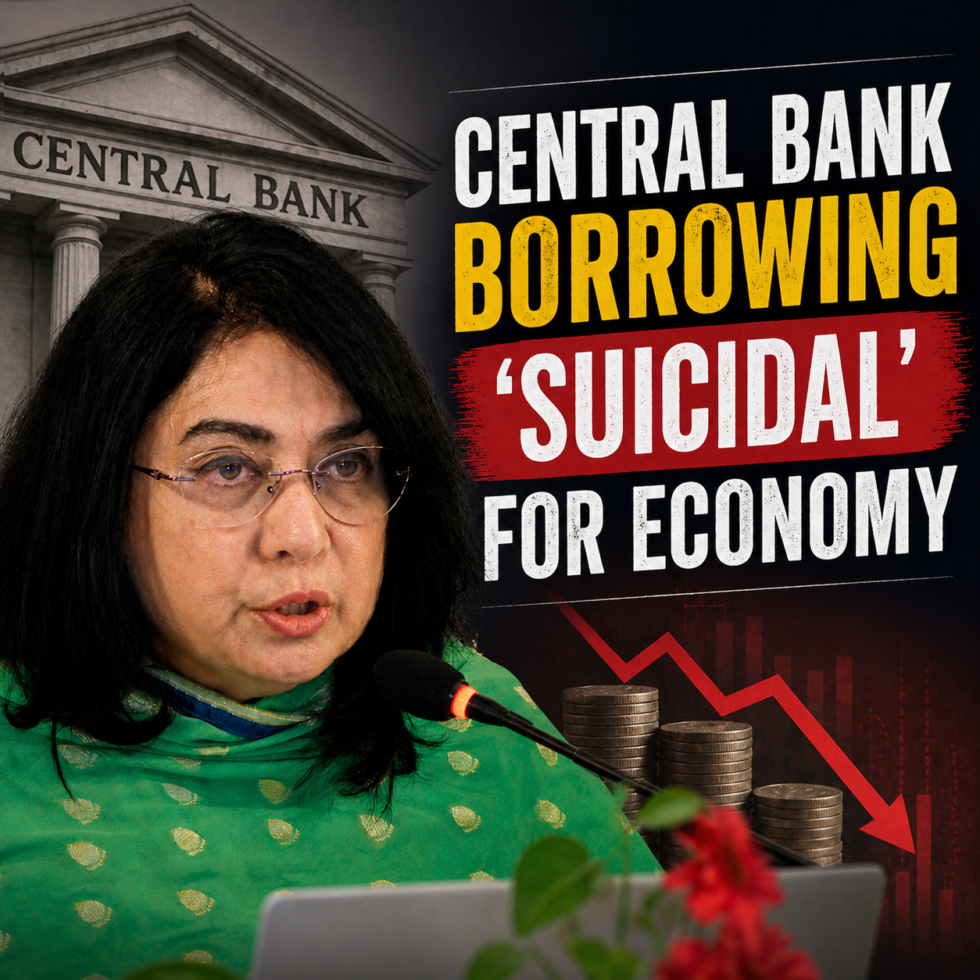
The issue highlighted by Dr Fahmida Khatun Central Bank Borrowing Bangladesh Economy reflects growing concern over the macroeconomic implications of government reliance on central bank financing. While such borrowing can provide short-term liquidity support, it introduces structural risks related to inflation, monetary policy effectiveness, and fiscal discipline.
Economists have cautioned that sustained central bank borrowing may expand money supply beyond productive capacity, contributing to inflationary pressure and weakening monetary policy transmission. The warning associated with Dr Fahmida Khatun Central Bank Borrowing Bangladesh Economy therefore extends beyond immediate fiscal needs to broader concerns about macroeconomic stability and policy credibility.
The development also raises questions about banking sector dynamics, including liquidity distribution and potential crowding out of private sector credit. Continued dependence on central bank financing could increase stress within the financial system if liquidity conditions tighten or if borrowing becomes persistent.
Monitoring borrowing trends, inflation dynamics, and monetary policy direction will be critical in assessing whether current conditions represent temporary fiscal management or a shift toward structural dependence on central bank financing.
Why this matters
Government borrowing from the central bank is a critical macroeconomic issue in Bangladesh. While it can provide short-term liquidity support, excessive reliance on central bank financing may increase inflationary pressure, weaken monetary discipline, and create long-term financial instability.
For financially aware readers, the key concern is not just borrowing itself, but the scale, frequency, and structural fiscal imbalance behind it.
What has been reported
According to The Daily Star, economists have raised concerns that rising government borrowing from the central bank could be harmful to the Bangladesh economy.
The Financial Express reports that Dr. Fahmida Khatun, Executive Director of the Centre for Policy Dialogue (CPD), described excessive central bank borrowing as “suicidal” for the economy, highlighting serious macroeconomic risks.
The CPD also noted that increased government borrowing may lead to additional pressure on the banking sector and overall financial system.
Across all sources, the core message is consistent. Economists are warning that continued dependence on central bank financing could create structural economic risks.
Structural implications beyond borrowing
Central bank borrowing increases liquidity in the economy. While this may support short-term government spending, it can create broader risks.
These include:
Inflation due to increased money supply
Weakening of monetary policy effectiveness
Reduced fiscal discipline
Pressure on exchange rate stability
These risks become more significant if borrowing continues over a prolonged period.
Impact on the banking sector
Higher government borrowing can affect liquidity distribution within the banking system.
At the same time, excessive borrowing may crowd out private sector credit, limiting access to financing for businesses.
The CPD has warned that continued borrowing pressure could increase stress within the banking sector, particularly if liquidity conditions tighten further.
Policy and credibility considerations
Central bank independence is essential for maintaining macroeconomic stability. Heavy reliance on central bank financing may raise concerns about policy credibility and fiscal discipline.
For investors and international observers, such developments can influence confidence in Bangladesh’s economic management.
Maintaining a balance between fiscal needs and monetary stability will be critical.
Risk assessment
If central bank borrowing remains limited and temporary, it may function as a short-term stabilisation tool.
If borrowing increases or becomes persistent, risks may include inflation, currency pressure, and reduced effectiveness of monetary policy.
The key risk lies in the scale and continuity of such borrowing.
What to monitor next
Government borrowing trends from Bangladesh Bank
Inflation and monetary policy direction
Banking sector liquidity conditions
Exchange rate stability
Fiscal deficit and revenue performance
Neutrality and disclosure
This report is prepared for analytical and informational purposes only. It does not constitute investment advice. The analysis is based on publicly reported information.
Institutional Lens
From an institutional perspective, Dr Fahmida Khatun Central Bank Borrowing Bangladesh Economy signals heightened concern over fiscal-monetary coordination and macroeconomic stability. Analysts will assess whether government reliance on central bank financing reflects temporary liquidity management or emerging structural imbalance. Sustained borrowing may affect inflation expectations, policy credibility, and the effectiveness of monetary tools. Institutional stakeholders, including development partners and financial institutions, will monitor how borrowing trends align with fiscal discipline and whether policy adjustments are implemented to maintain macroeconomic stability.
Retail Perception Lens
For the general public, Dr Fahmida Khatun Central Bank Borrowing Bangladesh Economy may be perceived through its impact on inflation and purchasing power. While the technical aspects of central bank financing are complex, the effects of increased money supply—such as rising prices—are more directly experienced. Retail perception may therefore focus on cost-of-living changes rather than policy mechanisms. The visibility of economist warnings can also influence public confidence in economic management, particularly if inflationary pressure becomes more pronounced.
Governance-Focused Perspective
From a governance standpoint, Dr Fahmida Khatun Central Bank Borrowing Bangladesh Economy raises questions about policy discipline, institutional independence, and fiscal accountability. Central bank autonomy is a key element of macroeconomic stability, and increased reliance on direct financing may blur the separation between fiscal and monetary functions. Governance analysis will examine whether policy frameworks ensure transparency, limit excessive borrowing, and maintain effective oversight. The long-term stability of the financial system depends on maintaining clear institutional roles and disciplined fiscal management.
Stay with us for more valuable insights—visit: [Click Now]
Sources referenced
The Daily Star
Central bank borrowing ‘suicidal’ for economy: CPD executive director
https://www.thedailystar.net/business/economy/news/central-bank-borrowing-suicidal-economy-cpd-executive-director-4165861
The Financial Express
Borrowing from central bank suicidal for economy: Dr Fahmida
https://thefinancialexpress.com.bd/economy/borrowing-from-central-bank-suicidal-for-economy-dr-fahmida
Centre for Policy Dialogue
Banks to face more crisis due to excess govt borrowings
https://cpd.org.bd/banks-to-face-more-crisis-due-to-excess-govt-borrowings/