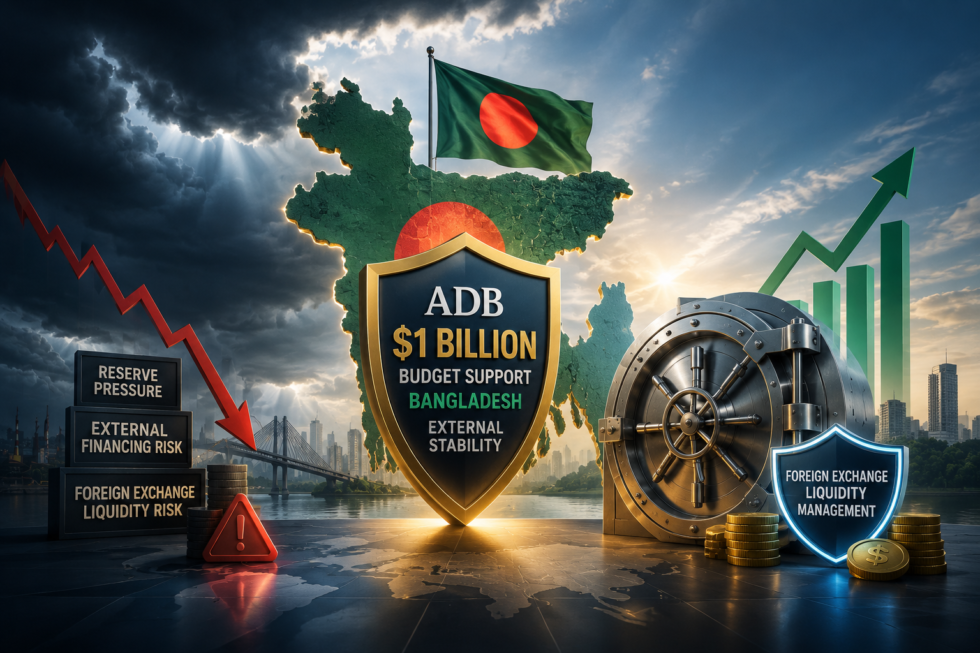
The development surrounding ADB $1 Billion Budget Support Bangladesh External Stability reflects Bangladesh’s ongoing effort to strengthen reserve positioning and manage external sector pressure amid rising global uncertainty. The proposed multilateral financing support comes at a time when foreign exchange liquidity, import financing conditions, and reserve adequacy remain central to macroeconomic management.
The financing discussions also highlight growing concern over external vulnerabilities linked to geopolitical instability, particularly in the Middle East. Higher fuel import costs, exchange rate pressure, and potential disruptions to remittance flows continue to shape Bangladesh’s external financing requirements.
The broader significance of ADB $1 Billion Budget Support Bangladesh External Stability extends beyond the financing amount itself. Budget support from multilateral institutions can strengthen reserve buffers, support fiscal flexibility, and reinforce confidence in macroeconomic policy management during periods of external stress.
At the same time, repeated reliance on external financing support may also reflect deeper structural dependence on foreign currency inflows and external borrowing. Monitoring reserve movements, oil price trends, remittance flows, and future multilateral financing discussions will remain important for assessing the sustainability of Bangladesh’s external sector stability.
Why this matters
Bangladesh is moving to secure another major round of external financial support as pressure on reserves, fiscal management, and foreign exchange stability continues to shape the country’s economic outlook.
The proposed $1 billion budget support package from the Asian Development Bank comes at a time when Bangladesh is attempting to stabilize its external sector while managing inflation, rising import costs, and uncertainty linked to global geopolitical tensions.
For financially aware readers, the significance of the development goes beyond the headline financing figure. Budget support from multilateral lenders often acts as a signal of international confidence in a country’s macroeconomic management framework. It also provides additional foreign currency liquidity that can ease short-term pressure on reserves and government financing requirements.
The timing of the discussions is particularly important because Bangladesh is simultaneously facing vulnerabilities linked to global energy markets, external payment obligations, and potential spillover risks from instability in the Middle East.
What has been reported
According to The Daily Star, the Asian Development Bank is expected to provide around $1 billion in budget support to Bangladesh. The report highlighted that discussions are progressing as the government seeks external financing support amid continued macroeconomic pressure.
Meanwhile, The Business Standard connected the financing discussions directly to Bangladesh’s attempt to create a financial cushion against potential shocks stemming from conflict and instability in the Middle East.
The reporting also suggested that rising geopolitical uncertainty is increasing concerns around:
- Fuel import costs
- External payment pressure
- Foreign exchange market volatility
- Supply chain disruptions
While both reports focused on the financing arrangement itself, less attention was given to what repeated dependence on multilateral budget support may indicate about Bangladesh’s broader external financing position.
Budget support is becoming increasingly important for external stability
Unlike project-based loans tied to infrastructure development, budget support financing provides governments with greater flexibility in managing fiscal and external-sector pressures.
For Bangladesh, this type of financing can help:
- Strengthen foreign exchange reserves
- Support budget financing needs
- Ease pressure on domestic borrowing
- Improve external payment capacity
- Stabilize market confidence during periods of uncertainty
The latest ADB support discussions arrive during a period when Bangladesh continues balancing multiple economic pressures simultaneously.
These include:
- Elevated import costs
- Slower reserve rebuilding
- Exchange rate adjustments
- Inflation management challenges
- Rising external financing needs
As a result, multilateral financing is increasingly functioning not only as development assistance but also as a macroeconomic stabilization tool.
Middle East risks are becoming a larger economic concern
The reference to Middle East war-related shocks is especially important because Bangladesh remains highly exposed to the region through several critical channels.
These include:
- Fuel and energy imports
- Overseas employment markets
- Remittance inflows
- Shipping and trade routes
Any prolonged instability in the Middle East could increase pressure on Bangladesh’s economy through higher energy costs and disruptions to external income flows.
For example, rising oil prices would directly increase Bangladesh’s import bill, putting additional pressure on both reserves and the exchange rate. At the same time, economic disruption in Gulf economies could eventually affect overseas employment demand and remittance momentum.
This explains why Bangladesh appears to be proactively strengthening its external financing buffer before global risks intensify further.
Reserve management and banking sector implications
Additional multilateral financing can provide temporary relief for reserve management because external loans increase foreign currency availability inside the financial system.
A stronger reserve position can help:
- Improve import payment confidence
- Reduce short-term dollar liquidity pressure
- Support exchange rate management
- Ease stress within the banking sector
Commercial banks remain heavily exposed to foreign currency conditions because they facilitate trade financing, import settlements, and external transactions.
When reserves weaken or dollar shortages intensify, banking-sector liquidity conditions can tighten rapidly. External budget support therefore indirectly supports broader financial-system stability.
However, reliance on repeated external financing also highlights how sensitive Bangladesh’s economy remains to external-sector shocks and foreign currency availability.
Market confidence and policy signaling
Multilateral support from institutions such as the Asian Development Bank often carries signaling value beyond the financing amount itself.
For investors and financially aware observers, continued support from international lenders may indicate:
- Confidence in Bangladesh’s macroeconomic adjustment process
- Ongoing engagement with policy reforms
- Reduced near-term external financing risk
- Stronger ability to manage balance-of-payments pressure
At the same time, repeated dependence on external support can also reinforce concerns around structural vulnerabilities tied to:
- Import dependency
- External debt management
- Reserve adequacy
- Foreign currency earnings sustainability
The broader market interpretation will therefore depend on whether Bangladesh can gradually stabilize reserves and reduce external-sector pressure through stronger exports, remittances, and investment inflows over time.
Risk assessment
If geopolitical tensions in the Middle East intensify further, Bangladesh could face renewed pressure through higher fuel import costs and increased external financing needs.
Potential risks include:
- Rising energy import bills
- Slower reserve accumulation
- Exchange rate volatility
- Higher fiscal pressure
- Increased demand for external borrowing
However, timely multilateral financing support could help soften some of these pressures in the short term and improve external-sector confidence.
The long-term sustainability of external stability will still depend on Bangladesh’s ability to strengthen export earnings, maintain remittance growth, and reduce vulnerability to imported inflation shocks.
What to monitor next
Financially aware readers are likely to monitor:
- Final approval timeline for the ADB support package
- Bangladesh’s reserve movement trends
- Global oil price volatility
- Middle East geopolitical developments
- Exchange rate conditions
- External borrowing levels
- Future multilateral financing negotiations
- Remittance inflow momentum from Gulf economies
The next phase of Bangladesh’s external-sector management will likely depend heavily on how global geopolitical risks evolve alongside domestic reserve and currency conditions.
Stay with us for more valuable insights—visit: [Click Now]
Governance-Focused Perspective
From a governance standpoint, ADB $1 Billion Budget Support Bangladesh External Stability highlights the importance of policy coordination, fiscal discipline, and external financing management. Governance analysis will focus on how multilateral support is integrated into broader macroeconomic strategy and whether financing is accompanied by institutional reforms or policy adjustments. The effectiveness of reserve management, transparency in external borrowing, and the sustainability of fiscal financing frameworks will remain central issues in evaluating Bangladesh’s external sector resilience.