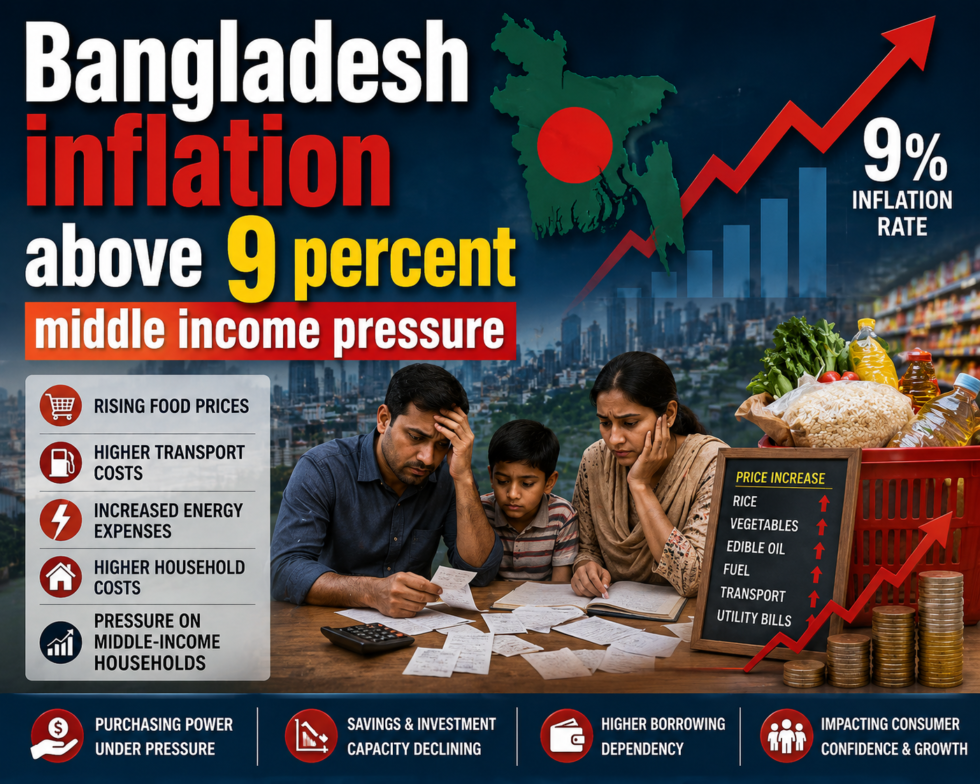
The Bangladesh inflation above 9 percent middle income pressure reflects sustained cost escalation across food, transportation, energy, and household expenses, increasing pressure on consumer purchasing power and economic stability. Inflation at this level indicates broad-based price pressure rather than isolated fluctuations in specific goods or sectors.
The Bangladesh inflation above 9 percent middle income pressure is being driven by a combination of domestic and external factors, including currency depreciation, higher import costs, transportation expenses, and volatility in global commodity markets. These factors continue to affect supply chains and retail pricing across the economy.
A key dimension of the Bangladesh inflation above 9 percent middle income pressure is its effect on middle-income households. Unlike lower-income groups that may receive targeted support measures, middle-income consumers often absorb rising living costs without direct assistance. This can reduce discretionary spending, weaken savings capacity, and delay investment decisions such as property purchases or business expansion.
The Bangladesh inflation above 9 percent middle income pressure also has implications for financial markets and monetary policy. Persistent inflation may lead to tighter liquidity conditions and higher interest rate environments, affecting borrowing costs, consumer loan demand, and investment activity. Businesses may also face margin pressure if operational costs rise faster than consumer demand.
From a broader economic perspective, the Bangladesh inflation above 9 percent middle income pressure can influence consumption patterns, retail activity, and overall market confidence. Prolonged inflationary conditions may slow economic momentum if household demand weakens significantly.
Monitoring inflation data, exchange rate trends, and monetary policy decisions will be essential in assessing how the Bangladesh inflation above 9 percent middle income pressure evolves and whether price stability conditions improve over time.
Rising Living Costs Intensify Economic Pressure
Bangladesh’s inflation rate has crossed the 9% mark again, increasing financial pressure on middle-income households and raising concerns over purchasing power, consumer spending, and overall economic stability. Persistent increases in food, transportation, energy, and household expenses continue to affect both urban and rural consumers.
Inflation at this level signals sustained cost pressure across the economy rather than temporary price fluctuations.
Food and Essential Commodity Prices Remain Key Drivers
Food inflation continues to play a major role in pushing overall consumer prices higher. Prices of essential goods, including rice, vegetables, edible oil, and protein items, remain elevated compared to previous periods.
At the same time, higher transportation and utility costs are contributing to broader inflationary pressure across supply chains and retail markets.
Key contributing factors include:
- Higher import costs due to currency depreciation
- Increased fuel and transportation expenses
- Supply chain inefficiencies
- Volatility in global commodity prices
These pressures directly affect household budgets, particularly among middle-income earners whose wages often adjust more slowly than inflation.
Stay with us for more valuable insights—visit: [Click Now]
Impact on Middle-Income Consumers
Middle-income households are among the most affected during prolonged inflationary periods. Unlike lower-income groups that may receive targeted support programs, middle-income earners often absorb rising costs without direct financial assistance.
Higher inflation can lead to:
- Reduced discretionary spending
- Lower savings capacity
- Increased reliance on personal borrowing
- Delayed investment and property purchases
Sustained cost pressure can also weaken overall consumer confidence and retail demand.
Business and Economic Implications
Persistent inflation affects businesses through higher operational and input costs. Manufacturers, retailers, and service providers may face margin pressure if consumers are unable to absorb further price increases.
Higher inflation also complicates monetary policy decisions. Central banks may maintain tighter liquidity conditions or higher interest rates to control inflation, which can slow investment and borrowing activity.
Banking and Financial Market Impact
Inflation influences multiple financial sectors, including:
- Interest rate movements
- Consumer loan demand
- Deposit growth patterns
- Equity market sentiment
Higher inflation combined with elevated interest rates can reduce liquidity available for discretionary investments and increase financing costs for businesses.
What to Monitor
- Monthly inflation and food inflation data
- Bangladesh Bank monetary policy decisions
- Exchange rate stability and import costs
- Wage growth relative to inflation trends
- Consumer spending and retail activity indicators
The sustainability of inflationary pressure will depend on domestic supply conditions, exchange rate management, and global commodity price trends in the coming months.
Sources
https://www.bbs.gov.bd
https://www.thedailystar.net/business/economy
https://www.newagebd.net
https://www.dhakatribune.com/business
https://www.business-standard.com.bd
Institutional Lens
From an institutional perspective, the Bangladesh inflation above 9 percent middle income pressure reflects sustained macroeconomic stress affecting consumption, liquidity conditions, and market confidence. Financial institutions and policymakers typically assess prolonged inflation in relation to purchasing power erosion, credit demand trends, and monetary tightening requirements. The Bangladesh inflation above 9 percent middle income pressure may also influence lending behavior, deposit patterns, and broader economic activity if inflationary conditions remain persistent.
Retail Perception Lens
Retail observers may interpret the Bangladesh inflation above 9 percent middle income pressure through rising daily expenses and reduced affordability across essential goods and services. Food prices, transportation costs, and utility expenses directly affect household financial planning, particularly among salaried middle-income groups. The broader impact of the Bangladesh inflation above 9 percent middle income pressure depends on whether income growth can keep pace with inflation and whether cost pressures stabilize in the coming months.
Governance-Focused Perspective
From a governance standpoint, the Bangladesh inflation above 9 percent middle income pressure highlights the importance of coordinated monetary, fiscal, and supply-side policy responses. Inflation management requires stability in exchange rates, efficient supply chains, and effective market oversight to reduce pricing distortions. The Bangladesh inflation above 9 percent middle income pressure may therefore serve as an indicator of policy effectiveness in maintaining macroeconomic balance and consumer confidence.