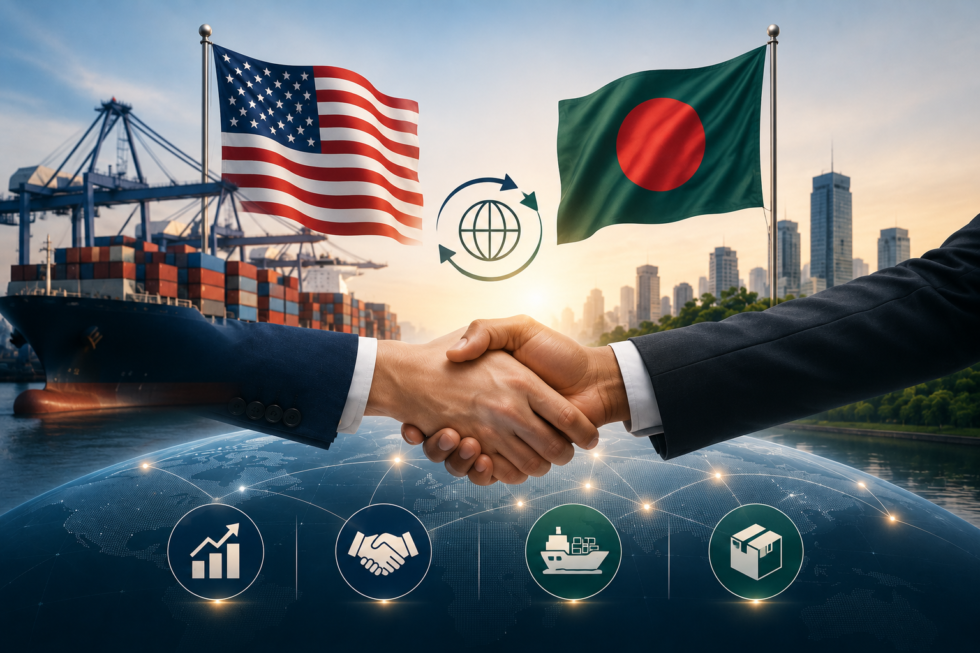
The development surrounding US Bangladesh Economic Partnership Supply Chain Strategy reflects Bangladesh’s ongoing effort to strengthen trade alignment and deepen economic engagement with one of its largest export markets. The visit by senior US trade officials comes at a time when Bangladesh is seeking greater integration into evolving global supply chains and broader investment cooperation.
The discussions carry significance beyond diplomatic engagement, particularly in the context of export diversification, manufacturing competitiveness, and foreign investment positioning. Bangladesh’s heavy dependence on garment exports and its approaching transition from least developed country status are increasing the importance of stronger bilateral economic relationships with major global partners.
The broader relevance of US Bangladesh Economic Partnership Supply Chain Strategy also lies in the shifting structure of global manufacturing networks. As international companies reassess supply-chain concentration risks, Bangladesh is attempting to position itself as a larger regional production and sourcing destination.
Future developments will depend on whether current engagement translates into formal trade cooperation, investment expansion, and improved market access. Monitoring trade negotiations, foreign investment trends, and supply-chain diversification strategies will remain important for assessing Bangladesh’s long-term external sector positioning.
Why this matters
A high-level visit by senior officials from the Office of the United States Trade Representative is drawing attention to the evolving trade and investment relationship between Bangladesh and the United States at a time when Bangladesh is seeking stronger export access, diversified foreign investment, and greater integration into global supply chains.
For financially aware readers, the significance of the visit goes beyond diplomatic engagement. Discussions involving trade agreements, tariff structures, labour standards, investment cooperation, and supply-chain partnerships can influence Bangladesh’s export competitiveness, manufacturing outlook, and long-term foreign investment positioning.
The United States remains one of Bangladesh’s largest export destinations, particularly for the ready-made garment sector. Any shift in trade engagement with Washington therefore carries broader implications for external earnings, industrial growth, and market confidence.
What has been reported
According to The Daily Star, senior officials linked to the US trade administration are visiting Bangladesh to discuss trade-related cooperation and possible future agreements between the two countries.
The report suggested that discussions may involve broader economic engagement, including market access, investment cooperation, and trade policy alignment.
Meanwhile, The Business Standard highlighted that the US delegation’s visit aims to strengthen bilateral trade and investment ties. The coverage connected the visit to Bangladesh’s broader efforts to attract foreign investment and deepen economic cooperation with major global partners.
Coverage from Somoy News also focused on the diplomatic and economic significance of the visit, emphasizing discussions around trade relations and future economic collaboration.
Across the reporting landscape, the main focus remained on the diplomatic importance of the visit itself. Less attention was given to the longer-term strategic implications for Bangladesh’s export structure, supply-chain positioning, and trade diversification strategy.
Bangladesh is seeking stronger positioning in global trade networks
Bangladesh’s economy remains heavily dependent on export earnings from the ready-made garment sector, with the United States serving as one of its largest overseas markets.
This makes trade engagement with the US especially important for several reasons:
- Export market stability
- Investment confidence
- Supply-chain diversification
- Tariff competitiveness
- Manufacturing expansion potential
As global manufacturers continue reassessing supply-chain concentration risks, Bangladesh is attempting to strengthen its position as an alternative production hub in Asia.
Closer trade engagement with the US could support that objective if discussions eventually translate into:
- Improved market access
- Greater investment cooperation
- Expanded sourcing relationships
- Enhanced compliance and governance alignment
The visit therefore reflects more than routine diplomatic interaction. It signals Bangladesh’s ongoing attempt to secure stronger economic positioning within a shifting global trade environment.
Trade negotiations now carry broader strategic value
Global trade relationships are increasingly shaped not only by tariffs and exports, but also by geopolitical alignment, labour compliance, supply-chain resilience, and strategic manufacturing partnerships.
For Bangladesh, engagement with US trade officials may carry added significance because the country is preparing for major economic transitions over the coming years, including eventual graduation from least developed country status.
That transition could gradually reduce certain trade preferences currently available to Bangladeshi exporters in global markets.
As a result, Bangladesh has stronger incentives to pursue deeper bilateral economic relationships that can help preserve export competitiveness after LDC graduation pressures begin intensifying.
The US side may also view Bangladesh as strategically important within broader Indo-Pacific economic and supply-chain frameworks, particularly as global companies continue reducing overdependence on single-country manufacturing bases.
Investment implications extend beyond garments
Although garments remain central to Bangladesh-US trade relations, the broader investment conversation is becoming increasingly important.
Bangladesh is attempting to attract more foreign investment into:
- Manufacturing
- Logistics
- Energy
- Technology services
- Infrastructure-linked industries
A stronger economic relationship with the United States could improve international investor perception regarding Bangladesh’s long-term market potential and supply-chain relevance.
At the same time, foreign investors continue monitoring several structural concerns, including:
- Regulatory consistency
- Energy reliability
- Banking-sector governance
- Foreign exchange management
- Ease of doing business conditions
Future trade engagement will therefore likely depend not only on diplomatic momentum but also on Bangladesh’s ability to improve operational and policy confidence for international businesses.
External sector and market confidence implications
For Bangladesh’s external sector, stronger trade and investment cooperation with the United States could provide several long-term benefits.
These may include:
- Higher export diversification opportunities
- Greater foreign direct investment inflows
- Improved dollar earnings stability
- Reduced concentration risk in export markets
- Expanded industrial capacity development
At a time when Bangladesh continues managing reserve pressure and external financing challenges, stronger export-market relationships remain strategically important.
Trade diplomacy is therefore increasingly linked to broader economic resilience rather than simple export volume growth alone.
Risk assessment
While the visit reflects positive engagement momentum, meaningful trade agreements or structural market access improvements typically require long negotiation processes.
Several uncertainties remain important:
- Global political shifts
- Trade policy changes in the US
- Labour and compliance expectations
- Bangladesh’s post-LDC trade positioning
- Geopolitical competition affecting supply chains
If discussions remain largely symbolic without policy follow-through, the economic impact may remain limited in the near term.
However, sustained engagement could gradually strengthen Bangladesh’s position within regional manufacturing and export networks.
What to monitor next
Financially aware readers are likely to monitor:
- Any formal trade framework discussions
- Investment-related announcements
- Export policy cooperation developments
- US sourcing diversification trends
- Bangladesh’s LDC graduation preparations
- Foreign direct investment commitments
- Labour and compliance policy discussions
- Future bilateral economic negotiations
The direction of Bangladesh-US trade engagement could become increasingly important as global supply chains continue restructuring across Asia.
Stay with us for more valuable insights—visit: [Click Now]
Neutrality and disclosure
This report is prepared for analytical and informational purposes only. It does not constitute investment advice. The analysis is based on publicly reported information and ongoing developments related to Bangladesh-US trade and investment relations.
Institutional Lens
From an institutional perspective, US Bangladesh Economic Partnership Supply Chain Strategy reflects Bangladesh’s attempt to strengthen long-term trade positioning within evolving global manufacturing networks. Policymakers, trade analysts, and financial institutions will assess whether bilateral engagement with the United States results in stronger market access, investment cooperation, and supply-chain integration opportunities. Institutional observers are also likely to focus on how Bangladesh balances export competitiveness, regulatory alignment, and post-LDC transition challenges while seeking deeper integration into global trade frameworks.
Retail Perception Lens
For general market participants, US Bangladesh Economic Partnership Supply Chain Strategy may be interpreted through expectations related to export growth, employment opportunities, and foreign investment expansion. Public perception often connects stronger economic ties with the United States to potential gains in industrial activity and manufacturing demand, particularly in export-oriented sectors. Retail interpretation may therefore focus more on economic opportunity and long-term business activity than on the technical structure of trade negotiations or policy frameworks.
Governance-Focused Perspective
From a governance standpoint, US Bangladesh Economic Partnership Supply Chain Strategy highlights the importance of policy consistency, trade compliance, and investment environment stability. Governance analysis will focus on Bangladesh’s ability to strengthen operational conditions for international businesses while maintaining labour, regulatory, and supply-chain standards expected in global trade partnerships. Future economic engagement may also depend on how effectively Bangladesh addresses issues related to banking-sector governance, foreign exchange management, and ease of doing business conditions.