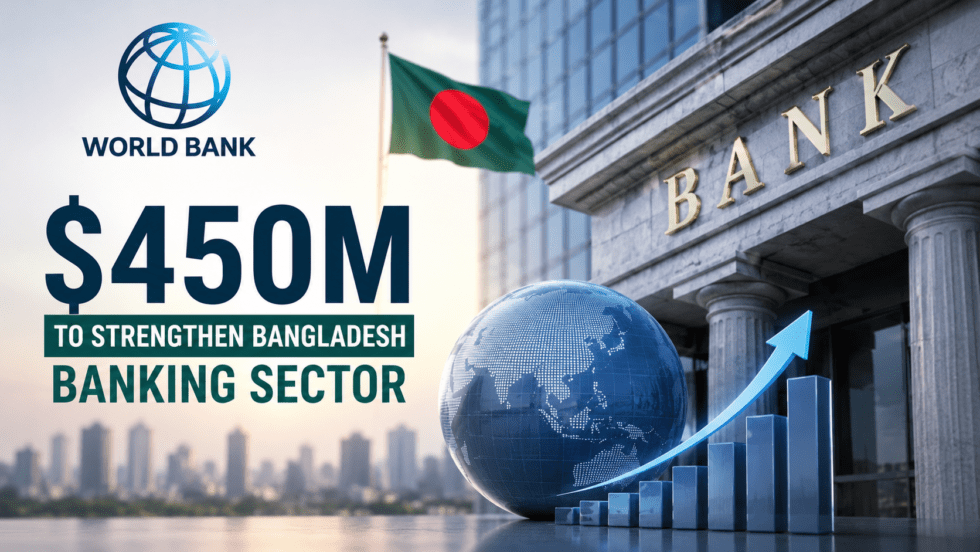
The World Bank Bangladesh Banking Reform programme marks a significant step in strengthening Bangladesh’s financial system through governance-focused institutional reforms rather than short-term financial support alone. The approval of a $450 million financing package underscores the importance of improving banking supervision, regulatory effectiveness, crisis management, and transparency as Bangladesh seeks to reinforce long-term financial stability.
The broader significance of World Bank Bangladesh Banking Reform extends beyond the banking sector. A stronger and more resilient financial system is essential for improving credit allocation, supporting private-sector investment, mobilising capital, and enhancing investor confidence. These reforms also align with Bangladesh’s broader economic objectives, including strengthening financial governance and supporting sustainable long-term growth.
The programme arrives at a time when Bangladesh continues to address structural challenges such as non-performing loans, governance weaknesses, capital adequacy concerns, and financial-sector efficiency. Successful implementation could improve institutional credibility while creating a more stable environment for domestic investment and international financing.
Future developments will depend on the pace of governance reforms, regulatory enforcement, banking-sector resilience, and measurable improvements in financial-sector performance. Monitoring implementation progress will remain essential for evaluating the long-term impact of the reform programme on Bangladesh’s economic transformation.
Stay with us for more valuable insights—visit: Click Now
Why this matters
The approval of a $450 million financing package by the World Bank marks one of the most significant international endorsements of Bangladesh’s banking sector reform agenda in recent years. Rather than serving as routine development assistance, the funding is intended to strengthen banking governance, improve financial stability, and address long-standing structural weaknesses that continue to affect confidence in the country’s financial system.
For financially aware readers, the announcement is important because Bangladesh’s banking sector sits at the centre of almost every major economic objective—from attracting investment and supporting private-sector growth to achieving the government’s ambition of becoming a $1 trillion economy. A stronger banking system influences credit availability, investor confidence, capital allocation, and overall economic resilience.
What has been reported
According to The Business Standard, the World Bank has approved $450 million to support Bangladesh’s banking sector reforms, focusing on strengthening governance, improving regulatory oversight, and enhancing financial stability.
A press release published by the World Bank explains that the programme is designed to improve banking supervision, modernise financial regulation, enhance crisis management capacity, and increase transparency across the banking system.
Meanwhile, The Financial Express highlighted the financing as an important step toward accelerating long-discussed banking reforms aimed at restoring confidence in the sector.
Separately, The Daily Star noted that weaknesses within Bangladesh’s banking sector remain one of the biggest obstacles to achieving the government’s long-term target of building a $1 trillion economy, reinforcing why structural reforms have become increasingly urgent.
Taken together, the reports present a consistent picture: international financial institutions recognise Bangladesh’s economic potential but also see banking reform as a prerequisite for sustaining long-term growth.
Bangladesh’s banking sector remains the economy’s biggest structural challenge
Over the past decade, Bangladesh has maintained relatively strong economic growth, but weaknesses inside the banking sector have increasingly become a constraint on investment and capital allocation.
Persistent concerns include:
- Rising non-performing loans
- Weak governance standards
- Loan concentration risks
- Limited lending discipline
- Capital adequacy challenges
- Regulatory enforcement gaps
These issues affect not only banks but also businesses seeking financing, investors evaluating economic risk, and foreign institutions considering long-term investment opportunities.
The World Bank financing therefore targets institutional reform rather than simply providing liquidity.
Why governance matters more than funding
The announcement is significant because the emphasis is not on expanding lending but on improving how the banking system operates.
According to the World Bank, key reform priorities include:
- Stronger banking supervision
- Improved financial sector governance
- Better crisis preparedness
- Enhanced transparency
- Modern regulatory frameworks
These reforms aim to reduce systemic risk while increasing confidence among depositors, investors, and international development partners.
For Bangladesh, stronger governance could ultimately prove more valuable than additional short-term financing.
Implications for private investment
A healthier banking system directly affects the broader economy.
If reforms improve confidence and lending efficiency, businesses may benefit through:
- Easier access to credit
- More efficient capital allocation
- Lower financing uncertainty
- Improved investment confidence
Conversely, if governance reforms stall, financing constraints could continue limiting industrial expansion and private-sector growth.
The effectiveness of the reform programme will therefore depend not only on funding availability but also on implementation quality.
International confidence receives a positive signal
Approval of a major World Bank programme sends an important message to international financial markets.
Development financing of this scale generally reflects confidence that meaningful institutional reforms can be implemented over time.
For Bangladesh, that may support:
- International investor confidence
- Multilateral financing relationships
- Broader financial-sector credibility
- Future reform cooperation
However, continued international confidence will likely depend on measurable progress rather than policy commitments alone.
Banking reform and the trillion-dollar economy
Bangladesh’s ambition to become a $1 trillion economy requires a financial system capable of supporting significantly larger investment volumes.
Without stronger banks, financing future industrial expansion, infrastructure projects, and private-sector investment will become increasingly difficult.
A more resilient banking sector would strengthen:
- Capital mobilisation
- Investment financing
- Business expansion
- Financial stability
- Economic resilience
This explains why banking reform is increasingly viewed as a foundational requirement rather than a standalone financial-sector issue.
Risk assessment
The World Bank programme provides both financing and policy support, but successful outcomes remain dependent on implementation.
Key risks include:
- Slow reform execution
- Governance resistance
- Delays in regulatory enforcement
- Persistent non-performing loan pressure
- Weak institutional coordination
If reforms progress effectively, Bangladesh could significantly strengthen confidence in its financial system over the medium term.
What to monitor next
Financially aware readers are likely to monitor:
- Banking governance reforms
- Bangladesh Bank regulatory actions
- Non-performing loan trends
- Capital adequacy improvements
- Progress under the World Bank programme
- Private-sector credit growth
- Investor confidence indicators
- Additional multilateral financial support
The coming years will determine whether this financing package becomes a turning point for Bangladesh’s banking sector or simply another reform initiative with limited structural impact.
Neutrality and disclosure
This report is prepared for analytical and informational purposes only. It does not constitute investment advice. The analysis is based solely on publicly reported information and official announcements regarding Bangladesh’s banking sector reform programme.
Stay with us for more valuable insights—visit: Click Now
Institutional Lens
From an institutional perspective, World Bank Bangladesh Banking Reform reflects growing international support for strengthening Bangladesh’s financial-sector governance and institutional resilience. Financial institutions, multilateral development partners, and policymakers are likely to assess whether the reform programme can improve regulatory oversight, reduce systemic banking risks, and restore confidence in the financial system. Institutional observers will also monitor implementation progress, particularly in areas such as banking supervision, governance standards, and crisis management capacity.
Retail Perception Lens
For general market participants, World Bank Bangladesh Banking Reform may be viewed as a positive step toward improving the health of Bangladesh’s banking sector. Retail perception is likely to focus on whether stronger banking governance can enhance access to credit, improve financial stability, and strengthen public confidence in banks. Although the programme does not provide direct financial benefits to consumers, successful reforms could contribute to a more stable banking environment and support long-term economic confidence.
Governance-Focused Perspective
From a governance standpoint, World Bank Bangladesh Banking Reform underscores the importance of transparency, regulatory accountability, and institutional effectiveness in maintaining financial stability. Governance analysis will likely focus on how Bangladesh implements reforms related to banking supervision, non-performing loan management, crisis preparedness, and regulatory enforcement. The long-term success of the programme will depend on sustained policy implementation, institutional coordination, and measurable improvements in governance across the banking sector.
Sources referenced
- The Business Standard — World Bank approves $450m for Bangladesh banking sector support
- World Bank — World Bank helps Bangladesh strengthen its banking sector
- The Financial Express — World Bank lends Bangladesh $450m to bolster banking reforms
- The Daily Star — Banking sector key hurdle to $1tn economy
Stay with us for more valuable insights—visit: [Click Now]