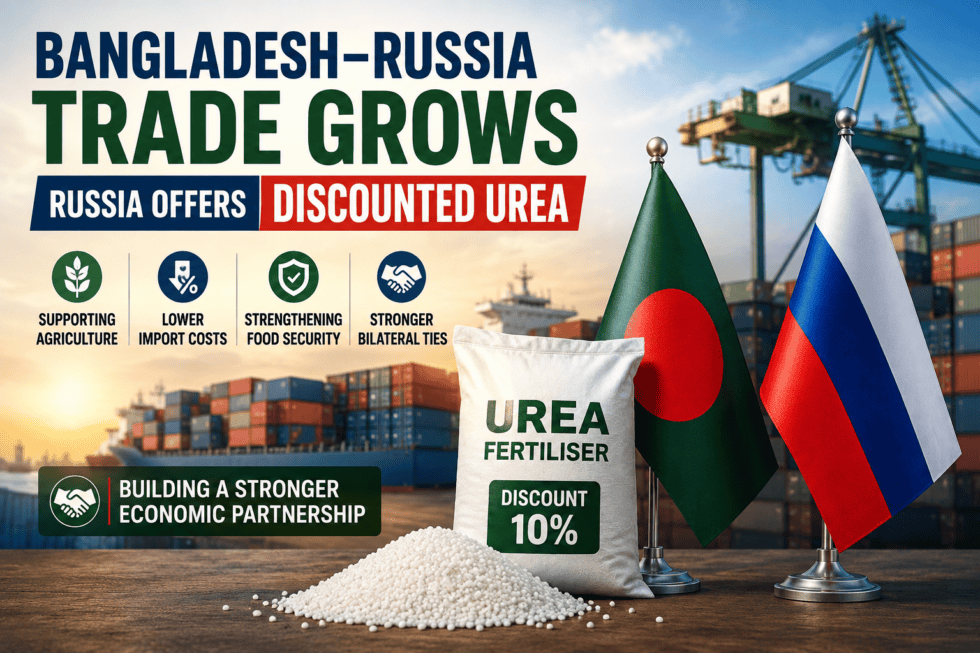
The Bangladesh Russia Trade relationship is entering a new phase as Russia offers Bangladesh a 10% discount on urea fertiliser while seeking to expand bilateral trade and exports of food products. The proposal reflects growing economic cooperation between the two countries and could support Bangladesh’s efforts to strengthen food security, reduce agricultural input costs, and diversify strategic import sources amid ongoing global commodity market uncertainty.
The expansion of Bangladesh Russia Trade carries broader economic significance beyond fertiliser procurement. Lower urea import costs could ease pressure on the government’s subsidy programme, improve agricultural productivity, and help stabilise food production costs. At the same time, discussions on increasing imports of wheat and other agricultural commodities highlight a wider strategy to strengthen supply-chain resilience through diversified international partnerships.
For Bangladesh, deeper Bangladesh Russia Trade cooperation may also contribute to stronger fiscal management by reducing procurement costs for essential agricultural inputs while improving long-term trade resilience. Expanding bilateral commerce across multiple sectors could create opportunities for more stable commodity supplies and enhanced economic cooperation beyond agriculture.
The long-term impact of Bangladesh Russia Trade will depend on the successful implementation of commercial agreements, competitive pricing, efficient logistics, and sustainable payment arrangements. If these discussions translate into long-term partnerships, Bangladesh could strengthen both its agricultural sector and broader economic resilience through a more diversified international trade network.
Stay with us for more valuable insights—visit: Click Now
Why this matters
Russia has offered Bangladesh a 10% discount on urea fertiliser while expressing interest in expanding bilateral trade and increasing exports of food products. The proposal comes at a time when Bangladesh is seeking to strengthen food security, manage agricultural input costs, and diversify its import sources amid continued volatility in global commodity markets.
For financially aware readers, the development extends well beyond fertiliser procurement. Lower fertiliser prices could reduce government subsidy pressure, support agricultural production, and help moderate food inflation. At the same time, deeper trade cooperation with Russia could diversify Bangladesh’s international supply chain and reduce dependence on traditional trading partners for strategic commodities.
What has been reported
According to The Business Standard, Russia has proposed supplying Bangladesh with urea fertiliser at a 10% discounted price while also offering to expand exports of wheat and other food products. The discussions also covered opportunities to strengthen bilateral trade and economic cooperation.
The Daily Star reported that the proposed discount could reduce Bangladesh’s fertiliser import costs and ease pressure on the government’s agricultural subsidy programme.
BDNews24 highlighted the broader discussions on expanding trade relations between the two countries, while Daily Sun emphasised Russia’s interest in increasing exports of agricultural commodities alongside fertiliser supplies.
Taken together, the reports suggest that the discussions are aimed at strengthening long-term economic cooperation rather than focusing solely on a single commodity transaction.
Fertiliser remains critical to Bangladesh’s food security
Bangladesh imports a significant portion of its fertiliser requirements to support domestic agricultural production.
Urea remains one of the most widely used fertilisers for:
- Rice cultivation
- Wheat production
- Maize farming
- Vegetable cultivation
- Other major crops
Changes in international fertiliser prices directly affect agricultural production costs and government subsidy expenditure.
A discounted supply agreement could therefore provide meaningful fiscal and economic benefits if implemented successfully.
Lower fertiliser costs could ease subsidy pressure
The government spends substantial resources each year on fertiliser subsidies to support farmers and maintain agricultural productivity.
If Bangladesh imports urea at lower prices, potential benefits include:
- Reduced subsidy expenditure
- Lower procurement costs
- Greater fiscal flexibility
- Improved fertiliser availability
- More stable agricultural input prices
Although the final impact would depend on procurement volumes and contract terms, lower import prices could help reduce pressure on public finances.
Agricultural production could benefit
Affordable fertiliser plays a key role in maintaining crop yields.
Stable access to urea may support:
- Higher agricultural productivity
- Food supply stability
- Rural income growth
- Lower production costs for farmers
While fertiliser prices represent only one component of agricultural costs, reliable and competitively priced supplies remain essential for Bangladesh’s food security strategy.
Trade diversification is becoming increasingly important
The discussions also reflect Bangladesh’s broader objective of diversifying its international trade relationships.
Expanding commercial cooperation with Russia could strengthen imports of:
- Fertilisers
- Wheat
- Agricultural commodities
- Other strategic goods
Diversified sourcing reduces dependence on a limited number of suppliers and may improve resilience during periods of global supply-chain disruption.
For Bangladesh, broader trade partnerships can also strengthen negotiating power when procuring essential commodities.
Bilateral trade opportunities extend beyond agriculture
Russia’s proposal indicates interest in expanding overall trade rather than limiting cooperation to fertiliser exports.
Potential areas for future cooperation may include:
- Agricultural trade
- Food commodities
- Industrial products
- Energy-related cooperation
- Manufacturing inputs
If bilateral trade expands, Bangladesh could benefit from a more diversified import portfolio while exploring additional export opportunities where commercially viable.
Challenges remain
Despite the positive proposal, several factors will determine the overall economic impact.
Key considerations include:
- Final contract terms
- International payment arrangements
- Shipping and logistics costs
- Global fertiliser price movements
- Diplomatic and trade conditions
The effectiveness of any agreement will ultimately depend on its commercial competitiveness and implementation.
Stay with us for more valuable insights—visit: Click Now
Risk assessment
The proposal presents several potential advantages, but execution remains important.
Potential opportunities include:
- Lower fertiliser import costs
- Reduced subsidy expenditure
- Stronger food security
- Diversified import sources
- Expanded bilateral trade
Potential risks include:
- Global commodity price volatility
- Logistics disruptions
- Payment mechanism challenges
- Supply-chain uncertainty
- Geopolitical developments affecting international trade
The long-term economic value of the proposal will depend on whether both countries translate discussions into commercially sustainable agreements.
What to monitor next
Financially aware readers are likely to monitor:
- Final fertiliser procurement agreements
- Bangladesh’s annual fertiliser import costs
- Government subsidy expenditure
- Agricultural input prices
- Wheat and food import arrangements
- Bangladesh–Russia trade volume
- Future bilateral economic cooperation initiatives
If implemented successfully, the proposed discount and broader trade discussions could contribute to lower agricultural input costs while strengthening Bangladesh’s long-term supply-chain resilience.
Neutrality and disclosure
This report is prepared for analytical and informational purposes only. It does not constitute investment or trade advice. The analysis is based solely on publicly reported information regarding Bangladesh–Russia trade discussions and fertiliser supply proposals.
Institutional Lens
From an institutional perspective, Bangladesh Russia Trade reflects Bangladesh’s strategy to strengthen supply-chain resilience while securing competitively priced agricultural inputs. Russia’s proposal to offer discounted urea fertiliser and expand exports of food products aligns with Bangladesh’s broader objectives of improving food security, reducing fiscal pressure from agricultural subsidies, and diversifying strategic import sources. Policymakers and development partners will closely monitor whether these discussions evolve into long-term commercial agreements that strengthen bilateral trade and support sustainable economic cooperation.
Retail Perception Lens
For businesses, farmers, and consumers, Bangladesh Russia Trade could have practical economic benefits if discounted fertiliser supplies reduce agricultural production costs. Lower input prices may help stabilise crop production and support food supply, while diversified import sources could improve market resilience during periods of global commodity volatility. At the same time, market participants will watch the final procurement terms, logistics arrangements, and implementation timeline before assessing the full economic impact of the proposed cooperation.
Governance-Focused Perspective
From a governance standpoint, Bangladesh Russia Trade highlights the importance of transparent procurement, efficient trade facilitation, and effective international cooperation. Any long-term agreement will require clear commercial terms, reliable payment mechanisms, and strong regulatory coordination to ensure uninterrupted supply of essential agricultural commodities. Successful implementation could strengthen Bangladesh’s food security strategy while demonstrating a balanced approach to diversifying international trade partnerships.
Stay with us for more valuable insights—visit: Click Now
Sources referenced
- The Business Standard — Russia offers cheaper urea fertiliser and food supplies to deepen trade with Bangladesh
- BDNews24 — Bangladesh–Russia trade discussions
- The Daily Star — Russia offers Bangladesh 10% discount on each tonne of urea
- Daily Sun — Russia proposes discounted fertiliser and expanded trade