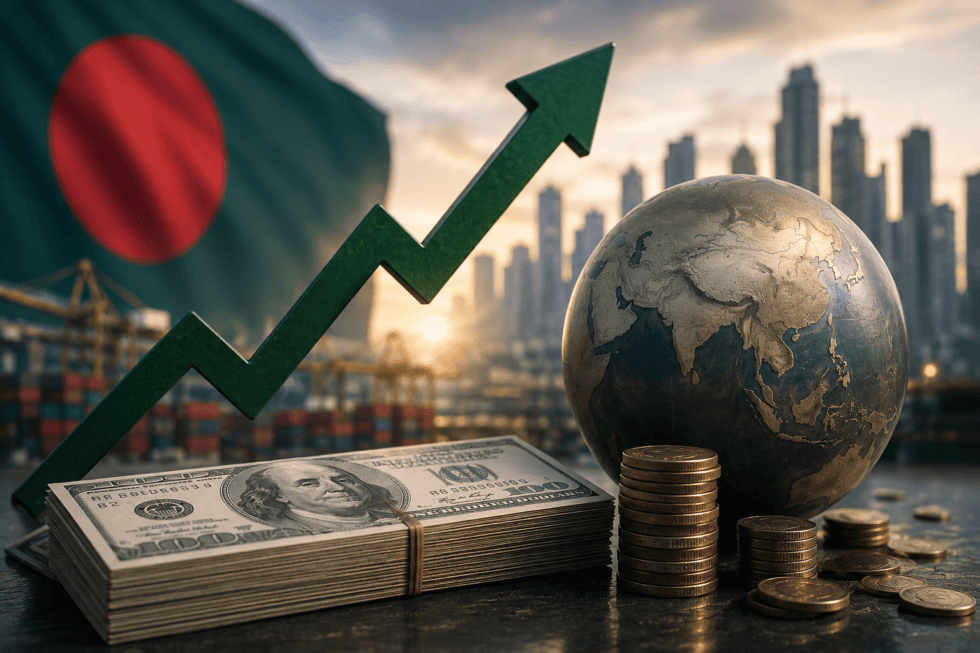
The Bangladesh Dollar Rate has resumed its upward trajectory, reaching around Tk 123 per US dollar in the interbank foreign exchange market as stronger import demand and tighter foreign currency liquidity place renewed pressure on the banking sector. The latest movement follows a period of relative stability and highlights that Bangladesh’s foreign exchange market continues to face structural demand-supply imbalances despite improvements in remittance inflows and export earnings.
The recent increase in the Bangladesh Dollar Rate reflects rising demand for foreign currency to finance imports of industrial raw materials, capital machinery, fuel, and other essential goods. While stronger import activity signals improving business momentum in parts of the economy, it also intensifies pressure on banks to secure sufficient dollar liquidity for international trade settlements. This dynamic has contributed to higher exchange rates within the interbank market as commercial banks compete for limited foreign currency.
A higher Bangladesh Dollar Rate carries broad macroeconomic implications, influencing import costs, inflation, manufacturing expenses, and business confidence. At the same time, export-oriented industries may benefit from stronger local currency earnings generated from overseas sales. Bangladesh Bank’s ongoing challenge will be to balance exchange rate stability, adequate foreign exchange reserves, inflation control, and market-based price discovery without undermining investor confidence or external sector resilience.
Looking ahead, the trajectory of the Bangladesh Dollar Rate will depend on the balance between foreign currency inflows and demand, supported by trends in remittances, export earnings, import payments, reserve accumulation, and Bangladesh Bank’s foreign exchange policy. These indicators will determine whether the recent appreciation represents a temporary market adjustment or the beginning of another period of sustained exchange rate pressure.
Stay with us for more valuable insights—visit: Click Now
Why this matters
The US dollar has resumed its upward trend in Bangladesh’s interbank foreign exchange market, with the exchange rate reaching around Tk 123 per dollar. The renewed increase comes after a period of relative stability and has raised fresh concerns over foreign currency liquidity, import costs, inflation, and overall macroeconomic stability.
For financially aware readers, movements in the dollar exchange rate are among the most closely watched economic indicators. A stronger dollar affects almost every segment of the economy—from importers and exporters to banks, manufacturers, investors, and ordinary consumers. The latest rise also raises important questions about whether Bangladesh’s external sector pressures are easing as expected or entering another period of adjustment.
What has been reported
According to The Business Standard, the recent appreciation of the US dollar is being driven by stronger import demand, increased demand for foreign currency from businesses, and continued pressure on the banking sector’s dollar liquidity. The report also notes that import payments have accelerated while the supply of foreign currency has not expanded at the same pace.
The Daily Star reported that the interbank exchange rate has climbed to approximately Tk 123 per dollar, reflecting renewed demand for foreign currency among commercial banks.
Meanwhile, BDNews24 highlighted that banks are once again experiencing tighter foreign exchange conditions, contributing to upward pressure on the exchange rate.
Taken together, the reports indicate that the latest movement is primarily driven by market demand rather than a sudden policy shift, suggesting that Bangladesh’s foreign exchange market remains under structural pressure despite improvements in remittance inflows and export earnings.
Import demand is once again driving dollar demand
One of the main reasons behind the dollar’s appreciation is the gradual recovery in import activity.
As businesses increase purchases of:
- Industrial raw materials
- Capital machinery
- Petroleum products
- Consumer goods
- Intermediate manufacturing inputs
their demand for foreign currency naturally rises.
When dollar demand grows faster than available supply, exchange rates move upward.
The latest trend therefore reflects improving business activity in some sectors, but it also exposes continuing pressure on Bangladesh’s foreign exchange market.
Higher remittances are helping—but not enough
Bangladesh has recently recorded record remittance inflows, providing substantial support to the country’s external sector.
However, strong remittance growth alone cannot fully offset rising foreign currency demand created by:
- Larger import bills
- External debt repayments
- International service payments
- Overseas business transactions
As a result, despite healthy remittance performance, the banking system continues facing periods of dollar shortages whenever import demand accelerates significantly.
This illustrates the complexity of Bangladesh’s external sector, where multiple sources of foreign currency demand compete simultaneously.
Banks continue facing foreign currency liquidity pressure
Commercial banks remain central to the current situation.
Banks must maintain sufficient foreign currency to:
- Finance imports
- Settle international trade transactions
- Support corporate clients
- Meet customer demand
When foreign currency availability tightens, banks compete more actively for dollar liquidity, pushing exchange rates higher within the interbank market.
The latest movement suggests that dollar demand continues exceeding short-term supply in parts of the banking system.
A stronger dollar has economy-wide implications
The exchange rate affects far more than importers alone.
A higher dollar increases the local currency cost of imported:
- Fuel
- Industrial equipment
- Food products
- Pharmaceuticals
- Consumer electronics
- Manufacturing inputs
Businesses facing higher import costs often pass part of those costs on to consumers, creating additional inflationary pressure across the economy.
For export-oriented industries, however, a moderately stronger dollar may improve export competitiveness by increasing local currency earnings from overseas sales.
The overall economic impact therefore depends on how successfully Bangladesh balances export growth with import costs.
Bangladesh Bank faces a delicate balancing act
The central bank continues attempting to maintain orderly foreign exchange market conditions while allowing greater market-based price discovery.
Its challenge is balancing several competing objectives:
- Exchange rate stability
- Adequate foreign exchange reserves
- Import financing
- Inflation control
- Market confidence
Excessive intervention may reduce reserves, while insufficient intervention could contribute to greater exchange rate volatility.
As Bangladesh gradually moves toward a more flexible exchange rate framework, market forces are expected to play an increasingly important role in determining the value of the taka.
Stay with us for more valuable insights—visit: Click Now
Risk assessment
The latest increase in the dollar exchange rate does not necessarily indicate a currency crisis, but it does highlight ongoing structural pressures within the foreign exchange market.
Key risks include:
- Higher import costs
- Additional inflationary pressure
- Reduced foreign currency liquidity
- Greater business uncertainty
- Continued exchange rate volatility
Potential positive developments include:
- Sustained remittance growth
- Higher export earnings
- Increased foreign investment
- Stronger reserve accumulation
- Improved foreign exchange market stability
The direction of the exchange rate over the coming months will largely depend on whether foreign currency inflows continue to outpace growing demand.
Stay with us for more valuable insights—visit: Click Now
What to monitor next
Financially aware readers are likely to monitor:
- Interbank dollar exchange rates
- Bangladesh Bank foreign exchange policy
- Monthly remittance inflows
- Export earnings
- Foreign exchange reserve levels
- Import payment trends
- Banking sector dollar liquidity
The coming months will provide a clearer picture of whether the recent appreciation represents a temporary market adjustment or the beginning of another prolonged period of foreign exchange pressure.
Neutrality and disclosure
This report is prepared for analytical and informational purposes only. It does not constitute investment or foreign exchange advice. The analysis is based solely on publicly reported information regarding Bangladesh’s foreign exchange market and recent movements in the US dollar exchange rate.
Institutional Lens
From an institutional perspective, the Bangladesh Dollar Rate reflects continuing structural pressure within the country’s foreign exchange market rather than a sudden deterioration in economic conditions. Rising import demand, combined with tighter foreign currency liquidity across commercial banks, has increased demand for US dollars in the interbank market. Policymakers, financial institutions, and international observers will closely monitor whether stronger remittance inflows, export earnings, and foreign exchange reserve management can offset these pressures while maintaining macroeconomic stability and market confidence.
Retail Perception Lens
For businesses and households, the Bangladesh Dollar Rate is a key indicator influencing the cost of imported goods and overall economic conditions. Importers may face higher financing costs, while consumers could experience additional inflationary pressure if businesses pass on increased import expenses. Export-oriented firms, however, may benefit from stronger local currency earnings on overseas sales. Market participants are therefore likely to watch exchange rate movements closely before making major purchasing, investment, or business expansion decisions.
Governance-Focused Perspective
From a governance standpoint, the recent rise in the Bangladesh Dollar Rate underscores the importance of effective foreign exchange management and transparent policy communication. Bangladesh Bank faces the challenge of balancing exchange rate flexibility with adequate liquidity, inflation control, and financial stability. The effectiveness of policy measures will depend on maintaining orderly market conditions while supporting sustainable reserve accumulation, facilitating legitimate trade financing, and strengthening confidence in the country’s foreign exchange framework as market-based pricing becomes more prominent.
Sources referenced
- The Business Standard — Why is the dollar rate rising again?
- The Daily Star — Dollar hits Tk 123 in inter-bank trade
- BDNews24 — Dollar market update
Stay with us for more valuable insights—visit: Click Now