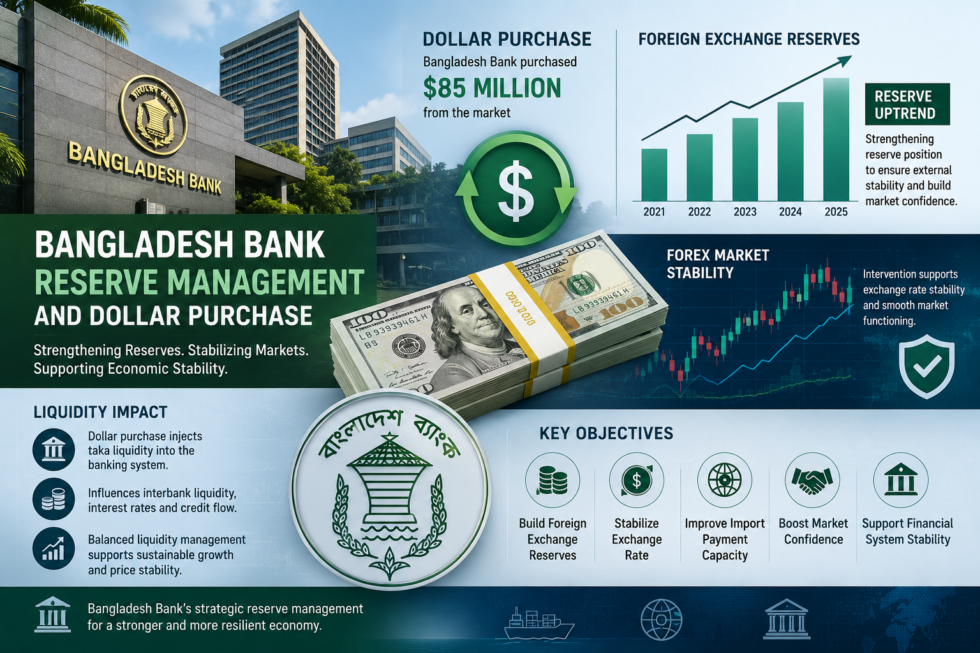
The Bangladesh Bank 85 million dollar purchase reserve management reflects the central bank’s ongoing effort to strengthen foreign exchange reserves and stabilize external sector conditions amid continued pressure on the currency market. Dollar purchases by the central bank are closely monitored because they influence reserve adequacy, exchange rate stability, and liquidity conditions within the banking sector.
The Bangladesh Bank 85 million dollar purchase reserve management suggests that foreign currency supply conditions in the interbank market may have improved through export earnings, remittance inflows, or external financing support. Reserve accumulation efforts are often viewed as an attempt to rebuild confidence in the external payment position and improve import financing capacity.
A key aspect of the Bangladesh Bank 85 million dollar purchase reserve management is its impact on liquidity conditions. When the central bank purchases dollars from the market, local currency liquidity increases within the banking system. This may influence interbank liquidity levels, short-term interest rates, and credit conditions depending on broader monetary policy measures.
The Bangladesh Bank 85 million dollar purchase reserve management also has implications for exchange rate stability. Central bank intervention can help moderate volatility in the foreign exchange market, although sustained stabilization depends on broader trade balances, reserve inflows, and macroeconomic management.
From a macroeconomic perspective, the Bangladesh Bank 85 million dollar purchase reserve management is linked to ongoing efforts to strengthen reserve buffers after earlier periods of external sector pressure driven by higher import costs, exchange rate fluctuations, and global commodity market volatility.
Monitoring reserve accumulation trends, interbank exchange rate movement, and liquidity management measures will be important in assessing the effectiveness of the Bangladesh Bank 85 million dollar purchase reserve management strategy over time.
Central Bank Continues Dollar Accumulation Effort
Bangladesh Bank has purchased another $85 million from the foreign exchange market as part of its ongoing reserve management strategy. The move reflects the central bank’s effort to strengthen foreign exchange reserves and stabilize the currency market amid continued pressure on external balances.
Dollar purchases by the central bank are closely monitored because they directly influence liquidity conditions, exchange rate stability, and banking sector foreign currency availability.
Stay with us for more valuable insights—visit: [Click Now]
Reserve Management and Currency Stabilization
When the central bank buys dollars from the market, it increases reserve holdings while injecting local currency liquidity into the banking system. Such interventions are generally aimed at:
- Strengthening foreign exchange reserves
- Stabilizing exchange rate volatility
- Improving import payment capacity
- Supporting external sector confidence
The timing of reserve accumulation often reflects improved dollar inflows from exports, remittances, or external financing support.
Impact on the Foreign Exchange Market
Central bank intervention can influence the supply-demand balance in the interbank dollar market. Increased dollar purchases may indicate that market supply conditions have improved compared to earlier periods of reserve pressure.
Key market implications include:
- Support for reserve rebuilding efforts
- Potential stabilization of the taka exchange rate
- Improved confidence in external payment capacity
- Changes in banking sector liquidity conditions
However, continued intervention also requires balancing reserve accumulation with inflation and liquidity management considerations.
Banking Sector and Liquidity Effects
Purchasing dollars injects additional taka liquidity into the financial system. Depending on broader monetary conditions, this may influence:
- Interbank liquidity levels
- Short-term interest rate movements
- Credit flow within the banking sector
If excess liquidity rises significantly, Bangladesh Bank may need to use sterilization tools to manage inflationary pressure.
Macroeconomic Context
Bangladesh’s external sector has faced pressure from:
- Higher import costs
- Exchange rate volatility
- Declining reserve levels in previous periods
- Global commodity price fluctuations
Recent dollar purchases suggest an effort to gradually strengthen reserve buffers while improving market confidence.
What to Monitor
- Future reserve accumulation trends
- Interbank dollar exchange rate movement
- Remittance and export inflow performance
- Bangladesh Bank liquidity management measures
- Import payment and trade balance conditions
The sustainability of reserve rebuilding efforts will depend on continued foreign currency inflows, stable trade conditions, and broader macroeconomic management.
Sources
https://www.bb.org.bd
https://www.thedailystar.net/business/economy
https://www.newagebd.net
https://www.dhakatribune.com/business
https://www.business-standard.com.bd
From an institutional perspective, the Bangladesh Bank 85 million dollar purchase reserve management is viewed as part of a broader effort to rebuild reserve buffers and stabilize external sector confidence. Financial institutions and market participants typically interpret such interventions in relation to exchange rate management, reserve adequacy, and liquidity conditions within the banking system.
Retail Perception Lens
Retail observers may interpret the Bangladesh Bank 85 million dollar purchase reserve management as a sign that foreign currency supply conditions have improved compared to earlier periods of market pressure. Exchange rate stability and reserve rebuilding efforts often influence public confidence regarding import costs, inflation trends, and overall economic stability.
Governance-Focused Perspective
From a governance standpoint, the Bangladesh Bank 85 million dollar purchase reserve management highlights the importance of reserve strategy, monetary discipline, and liquidity management coordination. Sustained reserve accumulation depends on balanced foreign exchange intervention, stable inflow conditions, and effective macroeconomic policy execution.