


Yearly Archives: 2026
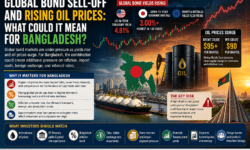
The global bond sell-off oil prices Bangladesh issue has created a potentially important external risk environment for Bangladesh, as rising government bond yields and higher crude oil prices can affect inflation, borrowing costs, foreign-exchange demand, and investor sentiment. The global bond sell-off oil prices Bangladesh connection is particularly relevant because Bangladesh depends heavily on imported […]
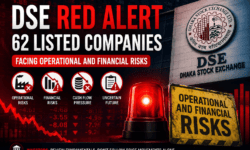
The DSE red alert 62 listed companies highlights growing investor concerns over inactive businesses, financial weakness, and uncertain operating prospects in Bangladesh’s capital market. The Dhaka Stock Exchange has identified 32 companies as closed, while another 30 companies face significant financial uncertainty outside the closed-company category. The warning is important because some distressed or inactive […]
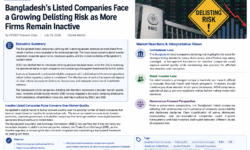
The Bangladesh listed companies delisting risk is drawing greater attention as more listed firms remain inactive or non-operational for extended periods. The issue raises concerns about investor protection, corporate governance, disclosure quality, and the overall credibility of Bangladesh’s capital market. The Bangladesh listed companies delisting risk does not mean that inactive companies are being immediately […]
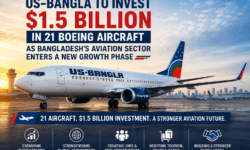
The US-Bangla Boeing Deal represents one of the largest private-sector investments in Bangladesh’s aviation industry, with the airline announcing plans to invest $1.5 billion in 21 Boeing aircraft. The expansion reflects growing confidence in Bangladesh’s long-term air travel market and is expected to strengthen passenger capacity, international connectivity, and the country’s position within South Asia’s […]
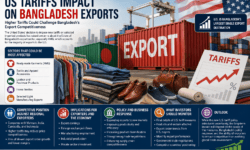
Executive Summary The US tariffs impact on Bangladesh exports has become a key concern for exporters and investors as the United States introduces new trade measures affecting selected imported products. Given that the U.S. is Bangladesh’s largest single export destination, any increase in import tariffs could influence export competitiveness, pricing strategies, and long-term investment decisions. […]

The Bangladesh Russia Trade relationship is entering a new phase as Russia offers Bangladesh a 10% discount on urea fertiliser while seeking to expand bilateral trade and exports of food products. The proposal reflects growing economic cooperation between the two countries and could support Bangladesh’s efforts to strengthen food security, reduce agricultural input costs, and […]

The Bangladesh Stock Market regained positive momentum as the DSEX benchmark index reclaimed the 5,900-point level, supported by a significant increase in trading turnover and renewed investor buying across multiple sectors. The stronger market activity reflects improving investor sentiment, driven largely by optimism surrounding upcoming corporate earnings and expectations of healthier market fundamentals. The recent […]

The S&P Bangladesh negative outlook reflects growing concerns over Bangladesh’s macroeconomic stability, external financing position, and banking sector vulnerabilities. Although S&P Global Ratings has maintained the country’s sovereign credit rating, the revised outlook signals an increased risk of a future downgrade if economic and financial conditions do not improve. The S&P Bangladesh negative outlook highlights […]

The NBR VAT Collection strategy has entered a new phase as Bangladesh’s National Board of Revenue aims to collect an additional Tk 38,000 crore in VAT during FY2026–27 by strengthening compliance among more than 10,000 high-risk firms. Rather than introducing new tax measures, the initiative focuses on reducing VAT leakage through risk-based enforcement, digital monitoring, […]

The Chinese Economic Zone Bangladesh project has entered its construction phase in Chattogram, marking a significant milestone in Bangladesh’s industrialisation strategy and long-term economic partnership with China. The development is expected to strengthen manufacturing capacity, attract foreign direct investment (FDI), and support export-oriented industries as Bangladesh prepares for its post-LDC transition. The strategic importance of […]