


Yearly Archives: 2026
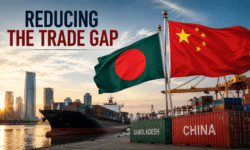
The Bangladesh China Trade Gap has become a central issue in the evolving economic relationship between the two countries as Bangladesh seeks greater market access, stronger export performance, and faster implementation of Chinese-backed infrastructure projects. The latest bilateral discussions reflect a broader strategy to create a more balanced economic partnership while supporting long-term external-sector resilience. […]

The World Bank Bangladesh Banking Reform programme marks a significant step in strengthening Bangladesh’s financial system through governance-focused institutional reforms rather than short-term financial support alone. The approval of a $450 million financing package underscores the importance of improving banking supervision, regulatory effectiveness, crisis management, and transparency as Bangladesh seeks to reinforce long-term financial stability. […]
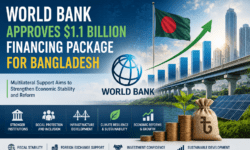
The World Bank 1.1 billion financing package Bangladesh represents a significant source of multilateral financing aimed at supporting the country’s economic reforms, fiscal stability, and long-term development objectives. The approval comes as Bangladesh continues to address inflationary pressure, external sector challenges, and the need for sustained investment in infrastructure and institutional capacity. The World Bank […]

The latest Bangladesh Remittance Growth trend highlights the increasing importance of overseas earnings as a stabilising force within the country’s external sector. With remittance inflows surpassing $3 billion for the sixth consecutive month, Bangladesh continues to benefit from a strong source of foreign currency liquidity at a time when reserve management, exchange rate stability, and […]

The proposed TIN Mandatory for Bank Accounts policy represents a significant shift in Bangladesh’s approach to financial transparency, taxpayer registration, and formal economic participation. By linking bank account opening requirements with tax identification, policymakers are seeking to strengthen the connection between the banking system and the country’s revenue administration framework. The broader significance of TIN […]

The Bangladesh stock market leadership investor confidence challenge highlights one of the most significant issues facing the country’s capital market. While leadership transitions often create expectations for reform and stronger governance, long-term market development depends heavily on restoring investor trust and strengthening institutional credibility. The Bangladesh stock market leadership investor confidence challenge comes at a […]
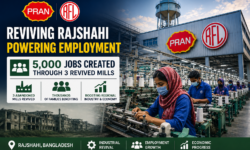
The PRAN-RFL Industrial Revival demonstrates a strategic effort to revive abandoned Rajshahi mills, marking a significant step in Bangladesh’s broader industrial recovery initiative. This move not only restores dormant manufacturing capacity but also expands regional employment opportunities and strengthens local supply chains. The broader significance of PRAN-RFL Industrial Revival lies in its contribution to regional […]
Bangladesh $1 Trillion Economy Vision Signals Ambitious Push for Long-Term Structural Transformation

The proposed Bangladesh $1 Trillion Economy vision reflects one of the country’s most ambitious long-term economic transformation efforts, aimed at expanding industrial capacity, strengthening investment activity, and accelerating structural development over the coming decade. The new five-year strategic framework signals the government’s intention to position Bangladesh as a larger regional economic and manufacturing hub by […]

The growing Bangladesh Capital Crisis reflects increasing pressure on the country’s financial system as concerns surrounding banking governance, market manipulation, and financing inefficiencies continue affecting investor confidence and private-sector activity. Recent remarks from the finance minister have reinforced concerns that structural weaknesses inside the banking and capital market ecosystem are beginning to create broader economic […]

The latest India Bangladesh Trade Restrictions highlight rising uncertainty surrounding regional trade stability and Bangladesh’s export vulnerability during a period of broader external-sector pressure. The new import restrictions imposed by India could affect a significant portion of Bangladesh’s regional exports, increasing concerns around market access, logistics efficiency, and cross-border trade dependence. The broader significance of […]