


Monthly Archives: May 2026
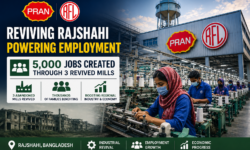
The PRAN-RFL Industrial Revival demonstrates a strategic effort to revive abandoned Rajshahi mills, marking a significant step in Bangladesh’s broader industrial recovery initiative. This move not only restores dormant manufacturing capacity but also expands regional employment opportunities and strengthens local supply chains. The broader significance of PRAN-RFL Industrial Revival lies in its contribution to regional […]
Bangladesh $1 Trillion Economy Vision Signals Ambitious Push for Long-Term Structural Transformation

The proposed Bangladesh $1 Trillion Economy vision reflects one of the country’s most ambitious long-term economic transformation efforts, aimed at expanding industrial capacity, strengthening investment activity, and accelerating structural development over the coming decade. The new five-year strategic framework signals the government’s intention to position Bangladesh as a larger regional economic and manufacturing hub by […]

The growing Bangladesh Capital Crisis reflects increasing pressure on the country’s financial system as concerns surrounding banking governance, market manipulation, and financing inefficiencies continue affecting investor confidence and private-sector activity. Recent remarks from the finance minister have reinforced concerns that structural weaknesses inside the banking and capital market ecosystem are beginning to create broader economic […]

The latest India Bangladesh Trade Restrictions highlight rising uncertainty surrounding regional trade stability and Bangladesh’s export vulnerability during a period of broader external-sector pressure. The new import restrictions imposed by India could affect a significant portion of Bangladesh’s regional exports, increasing concerns around market access, logistics efficiency, and cross-border trade dependence. The broader significance of […]
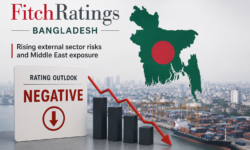
The latest Fitch Bangladesh Rating outlook revision reflects growing international concern over Bangladesh’s external-sector vulnerability amid rising geopolitical uncertainty in the Middle East. Although the sovereign credit rating itself remains unchanged, the shift from stable to negative signals heightened caution regarding the country’s ability to manage external shocks under current economic conditions. The broader significance […]
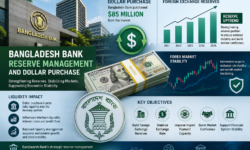
The Bangladesh Bank 85 million dollar purchase reserve management reflects the central bank’s ongoing effort to strengthen foreign exchange reserves and stabilize external sector conditions amid continued pressure on the currency market. Dollar purchases by the central bank are closely monitored because they influence reserve adequacy, exchange rate stability, and liquidity conditions within the banking […]

The introduction of the Bangladesh E-Loan framework reflects Bangladesh Bank’s broader effort to accelerate digital financial services and modernise retail banking infrastructure. By allowing commercial banks to offer fully digital loans of up to Tk50,000, the central bank is creating a regulatory foundation for technology-driven consumer lending within the formal banking system. The broader significance […]
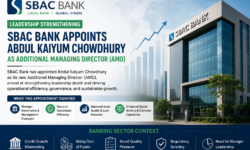
The SBAC Bank additional managing director appointment Abdul Kaiyum Chowdhury represents a leadership expansion within Bangladesh’s private banking sector during a period of heightened regulatory oversight, liquidity pressure, and operational risk management challenges. Senior management appointments in commercial banks are closely monitored because they can influence governance standards, operational discipline, and institutional stability. The SBAC […]

The latest Robi Profit Growth reflects improving operational efficiency and stronger monetisation of rising mobile data consumption within Bangladesh’s telecom sector. The company’s quarterly earnings performance suggests that telecom profitability is increasingly being driven by digital engagement, network utilisation efficiency, and disciplined expenditure management rather than subscriber growth alone. The broader significance of Robi Profit […]
US Bangladesh Economic Partnership Supply Chain Strategy: Trade Alignment and Investment Positioning

The development surrounding US Bangladesh Economic Partnership Supply Chain Strategy reflects Bangladesh’s ongoing effort to strengthen trade alignment and deepen economic engagement with one of its largest export markets. The visit by senior US trade officials comes at a time when Bangladesh is seeking greater integration into evolving global supply chains and broader investment cooperation. […]