Why this matters
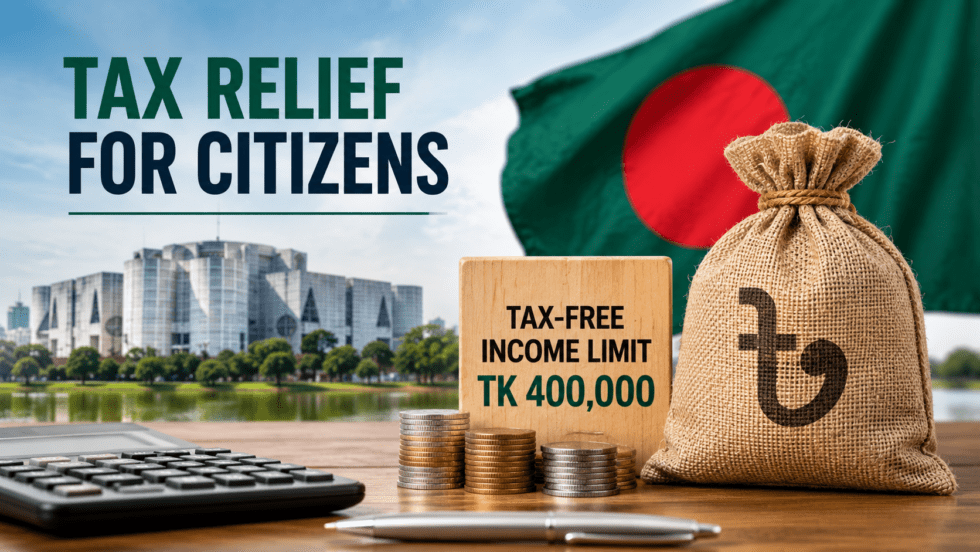
Bangladesh has increased the annual tax-free income threshold for individual taxpayers to Tk 400,000 for the next tax year, marking one of the most significant personal income tax adjustments in recent years. The move comes as households continue to face higher living costs, persistent inflation, and increasing financial pressure.
For financially aware readers, the policy is more than a tax relief measure. It reflects the government’s attempt to balance fiscal revenue collection with consumer purchasing power. While a higher exemption threshold may increase disposable income for lower and middle-income earners, it also raises questions about future tax revenue, fiscal sustainability, and the government’s strategy for expanding the tax base.
Stay with us for more valuable insights—visit: Click Now
What has been reported
According to The Financial Express, Bangladesh has officially raised the tax-free income threshold to Tk 400,000 for the upcoming tax year as part of the newly approved fiscal measures.
The Business Standard reported that Parliament passed the Finance Bill, confirming the revised tax-free income ceiling and finalising several budget-related tax provisions.
Meanwhile, The Daily Star had earlier reported the government’s proposal to increase the threshold, highlighting its potential impact on individual taxpayers before the Finance Bill received final approval.
Together, the reports indicate that the government intends to provide relief to lower-income taxpayers while maintaining broader fiscal reform efforts aimed at improving tax administration and expanding compliance.
A higher exemption threshold provides immediate relief to households
Increasing the tax-free income limit effectively reduces the tax burden for a large segment of salaried individuals and small taxpayers.
For many households, the additional disposable income may help offset the effects of:
- Higher food prices
- Rising housing expenses
- Increased transportation costs
- Healthcare expenditure
- Education expenses
Although the amount of tax savings will vary depending on income levels, the policy is expected to improve household cash flow and strengthen consumer purchasing power.
This could provide modest support to domestic consumption, which remains an important contributor to Bangladesh’s economic growth.
The government is balancing tax relief with revenue expansion
While the higher exemption threshold reduces tax liability for many individuals, the government continues pursuing broader efforts to increase tax collection.
Recent policy initiatives include:
- Mandatory TIN requirements for certain financial activities
- Digitalisation of tax administration
- Improved taxpayer identification
- Expansion of the formal tax base
These measures suggest that policymakers are attempting to shift from collecting more tax from existing taxpayers toward bringing more individuals and businesses into the formal taxation system.
The long-term objective appears to be improving tax compliance rather than relying solely on higher tax rates.
Fiscal implications cannot be ignored
Reducing taxable income for a larger group of citizens may temporarily lower personal income tax collections.
However, the actual fiscal impact will depend on whether broader tax reforms succeed in:
- Expanding the number of registered taxpayers
- Improving compliance
- Reducing tax evasion
- Increasing economic formalisation
If taxpayer registration grows alongside improved digital administration, revenue losses from the higher exemption threshold could be partially offset over time.
Otherwise, maintaining government spending priorities may become more challenging.
Consumer spending could receive a modest boost
Higher disposable income generally supports household consumption.
Individuals benefiting from lower tax obligations may allocate additional income toward:
- Retail spending
- Consumer goods
- Housing
- Education
- Healthcare
- Personal savings
While the macroeconomic impact may not be dramatic, stronger domestic demand could provide modest support to businesses serving the local market.
This is particularly relevant as Bangladesh continues managing slower global economic growth and external sector uncertainty.
The policy reflects changing economic realities
The decision also recognises that household income requirements have changed significantly over recent years.
Inflation and higher living costs have reduced the purchasing power of many middle-income families.
By increasing the tax-free threshold, policymakers are acknowledging that income levels previously considered taxable may no longer represent the same standard of living.
Regular adjustments to personal tax thresholds are common internationally and help ensure that tax systems remain aligned with changing economic conditions.
Stay with us for more valuable insights—visit: Click Now
Risk assessment
The revised tax-free threshold is likely to benefit individual taxpayers in the short term, but broader fiscal outcomes will depend on effective implementation of wider tax reforms.
Key risks include:
- Lower short-term income tax revenue
- Slower expansion of the taxpayer base
- Continued tax compliance challenges
- Fiscal pressure if revenue growth weakens
Potential opportunities include:
- Stronger household purchasing power
- Improved public acceptance of the tax system
- Greater formalisation of economic activity
- Higher voluntary tax compliance
What to monitor next
Financially aware readers are likely to monitor:
- National Board of Revenue implementation guidelines
- Changes in personal income tax collections
- Growth in registered taxpayers
- Consumer spending trends
- Future tax policy reforms
- Fiscal deficit developments
- Revenue collection performance during FY2026-27
The long-term success of the policy will depend on whether Bangladesh can simultaneously provide tax relief, broaden its tax base, and maintain sustainable public finances.
Neutrality and disclosure
This report is prepared for analytical and informational purposes only. It does not constitute investment or tax advice. The analysis is based solely on publicly reported information regarding Bangladesh’s approved Finance Bill and personal income tax reforms.
Institutional Lens
From an institutional perspective, Bangladesh Tax-Free Income reflects an effort to balance taxpayer relief with long-term fiscal sustainability. Policymakers, financial institutions, and development partners are likely to assess whether the higher tax-free threshold can support household purchasing power while preserving revenue growth through broader tax-base expansion and stronger compliance. Institutional observers will also monitor how effectively digital tax administration and taxpayer registration reforms compensate for potential short-term reductions in personal income tax collections.
Retail Perception Lens
For individual taxpayers, Bangladesh Tax-Free Income is likely to be viewed as a welcome measure that eases financial pressure amid rising living costs. Retail perception may focus on increased disposable income, improved household budgeting, and greater spending flexibility for lower- and middle-income earners. Public confidence in the tax system may also improve if the higher exemption threshold is accompanied by simpler tax procedures and more transparent revenue administration.
Governance-Focused Perspective
From a governance standpoint, Bangladesh Tax-Free Income highlights the government’s broader strategy of modernising tax administration while encouraging greater participation in the formal economy. Governance analysis will likely focus on whether ongoing reforms—such as digital tax systems, taxpayer identification, and compliance initiatives—can strengthen revenue collection without placing additional burdens on existing taxpayers. The long-term effectiveness of the policy will depend on sustained improvements in tax governance, transparency, and administrative efficiency.