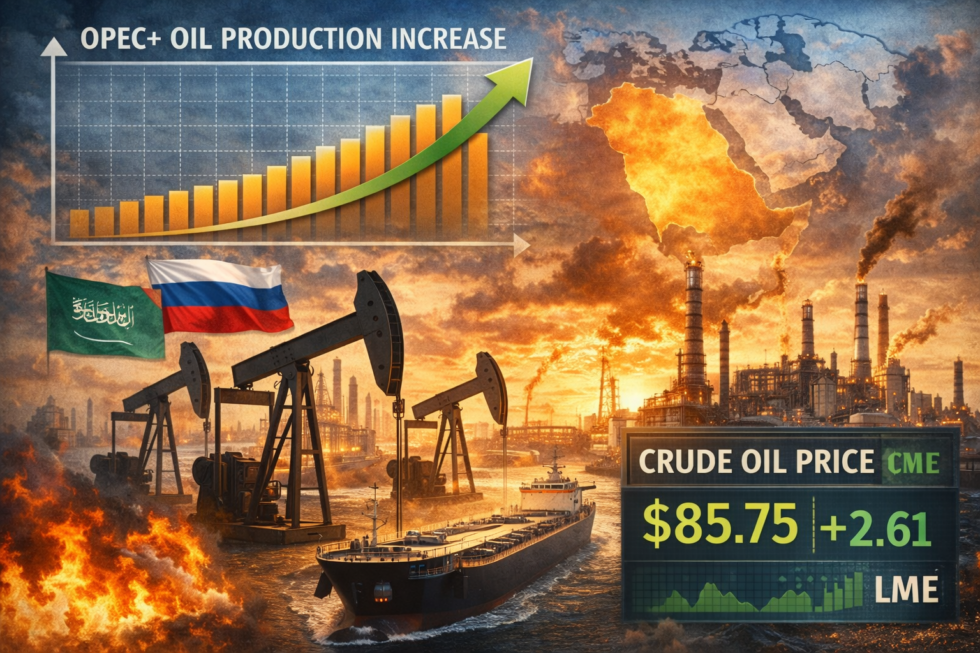
The OPEC plus oil production increase market implications highlight a coordinated supply adjustment within global energy markets during a period of heightened geopolitical tension in the Middle East. As uncertainty around regional stability raises concerns about potential supply disruptions, the decision by OPEC plus to raise production reflects an effort to stabilize market expectations and maintain supply continuity.
A key dimension of the OPEC plus oil production increase market implications lies in the group’s role in balancing supply management with revenue objectives among major oil-exporting economies. Production increases can moderate price spikes triggered by geopolitical risk, yet higher supply also introduces the possibility of downward pressure on prices if global demand growth slows.
Energy markets are particularly sensitive to developments affecting the Strait of Hormuz and other strategic export routes in the Middle East. Supply adjustments by OPEC plus therefore serve as a signal to markets that producers are attempting to offset potential disruptions while maintaining equilibrium between supply availability and demand conditions.
For financially aware observers, the OPEC plus oil production increase market implications should be interpreted alongside global inventory trends, demand patterns in major consuming economies, and compliance with production targets among OPEC plus members. These factors will determine whether the production increase stabilizes energy markets or whether geopolitical risks continue to influence price volatility.
Geopolitical Tensions Add Pressure to Energy Markets
Escalating tensions across parts of the Middle East have heightened uncertainty in global energy markets. The region accounts for a significant share of global crude oil production and export capacity, making any conflict-related disruption a key driver of price volatility.
Market participants have closely monitored developments affecting major producers and shipping routes, particularly those linked to the Strait of Hormuz, a critical corridor for global oil trade.
OPEC+ Moves to Raise Output
In response to tightening supply concerns and price volatility, OPEC+ has decided to increase oil production. The decision aims to stabilize markets, manage price spikes, and ensure supply continuity amid geopolitical risk.
OPEC+, which includes major oil exporters such as Saudi Arabia and Russia, adjusts output quotas periodically to balance global supply and demand conditions. The latest production increase signals an effort to offset potential disruptions and maintain market equilibrium.
Balancing Market Stability and Revenue Interests
The decision to raise production reflects a balancing act. Higher output can help ease price pressures caused by geopolitical risk, but it also risks lowering prices if demand growth slows.
Oil-producing countries must manage:
- Revenue objectives
- Market share competition
- Demand outlook in major consuming economies
- Global economic growth trends
A controlled increase in supply may prevent extreme price spikes while protecting long-term demand stability.
Impact on Global Energy Prices
Oil prices typically respond quickly to Middle East conflict headlines. However, when OPEC+ signals additional supply, markets may interpret this as a stabilizing factor.
The net impact on prices depends on:
- The scale of production increase
- Actual physical disruptions to supply
- Global inventory levels
- Demand conditions in the US, China, and Europe
If conflict risks remain contained and supply increases are sufficient, price volatility may moderate. If disruptions escalate, upward price pressure could persist despite higher output.
Implications for Inflation and Financial Markets
Energy prices directly influence global inflation, transportation costs, and manufacturing expenses. A sustained increase in oil production could ease inflationary pressures in importing countries.
Equity markets in energy-exporting nations may experience revenue adjustments depending on price direction. Meanwhile, oil-importing economies could benefit from more stable fuel costs.
Investors and policymakers will monitor shipping routes, production compliance among OPEC+ members, and updated demand forecasts to assess whether supply increases are sufficient to counter geopolitical risks.
Sources
https://www.reuters.com/markets/commodities/opec-plus-output-decision-middle-east-tensions/
https://www.bloomberg.com/news/articles/opec-plus-oil-production-increase-middle-east-conflict
https://www.cnbc.com/opec-plus-oil-output-hike-middle-east-war-impact/
Institutional Lens
From an institutional perspective, the OPEC plus oil production increase market implications are interpreted through the balance between geopolitical supply risk and coordinated production management. Institutional energy traders and commodity funds often evaluate whether additional OPEC plus output can offset potential disruptions in the Middle East, particularly those affecting shipping routes such as the Strait of Hormuz. When production increases coincide with geopolitical tension, markets may view the move as a stabilizing mechanism designed to prevent extreme price volatility and maintain predictable supply conditions.
Retail Perception Lens
Retail market observers frequently interpret the OPEC plus oil production increase market implications through visible oil price movements and media coverage of Middle East conflict developments. Rising geopolitical tensions often create expectations of higher oil prices. However, when OPEC plus signals additional supply, retail participants may perceive the move as an effort to moderate price spikes. The interaction between conflict headlines and production decisions can therefore shape short-term sentiment regarding energy markets and inflation expectations.
Governance-Focused Perspective
From a governance and policy perspective, the OPEC plus oil production increase market implications reflect coordinated supply management among major oil-producing economies. Production adjustments demonstrate how producer alliances attempt to influence global market stability while protecting long-term demand for crude oil. Monitoring quota compliance, policy coordination among member countries, and responses from major consuming economies will be essential for assessing whether the production increase successfully moderates geopolitical energy market risk.