


Why this matters
Trade agreements are often announced with emphasis on market access, tariff relief, or diplomatic breakthroughs. However, the long-term economic impact frequently depends on the detailed provisions embedded in the agreement.
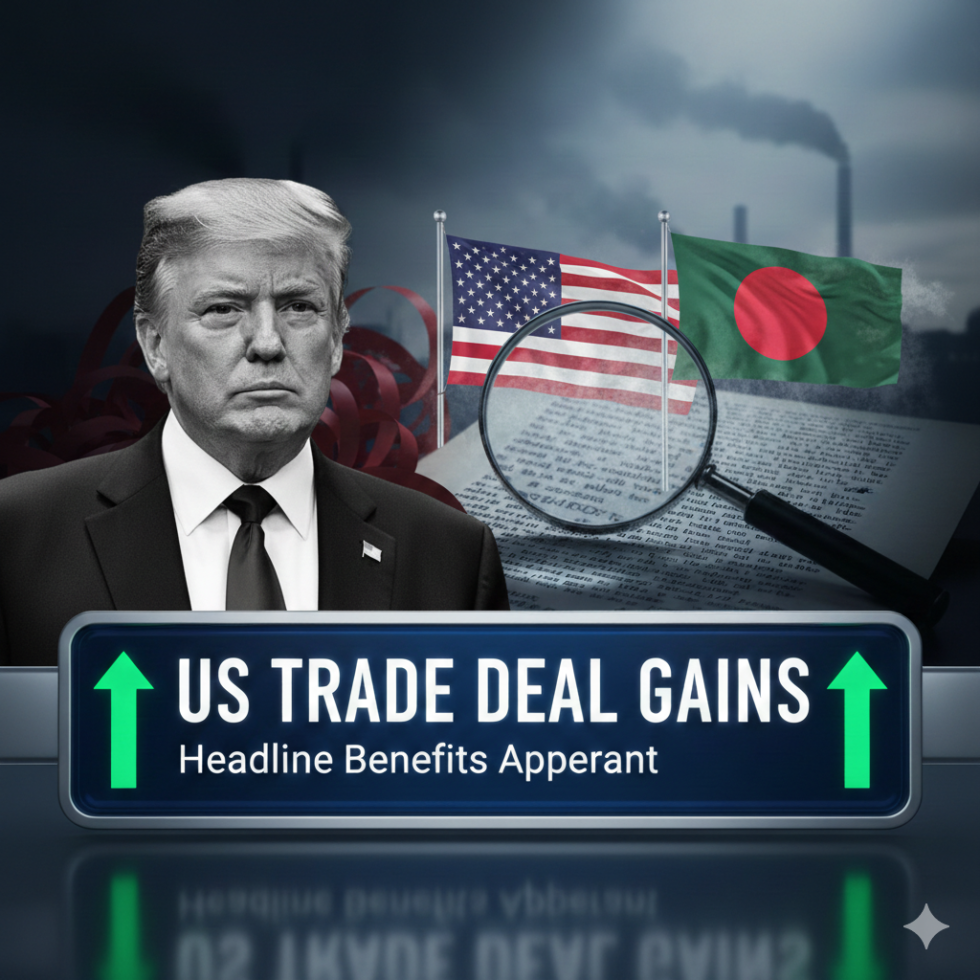
The Daily Star reports that concerns are emerging around the finer clauses of a proposed US trade deal involving Bangladesh. For financially aware readers, the critical issue is not the headline announcement but the structural obligations, compliance requirements, and long-term economic trade-offs embedded in the fine print.
What has been reported
The Daily Star highlights that while the trade deal may present opportunities, experts caution that certain provisions could create long-term constraints. These concerns relate to regulatory commitments, intellectual property standards, labour conditions, and compliance obligations that may not be immediately visible in the public announcement.
The reporting suggests that the agreement may contain clauses that affect domestic policy flexibility and industry competitiveness.
Structural implications beyond tariffs
Trade deals with the United States typically extend beyond tariff adjustments. They often include provisions on:
Labour standards
Intellectual property protections
Environmental compliance
Digital trade rules
Dispute settlement mechanisms
While such clauses can improve governance standards, they may also increase compliance costs for domestic industries, particularly export-oriented sectors with thin margins.
Impact on export competitiveness
If stricter compliance standards are introduced, industries such as ready-made garments and pharmaceuticals could face higher certification, reporting, and operational costs.
In the short term, this may reduce price competitiveness. In the long term, however, higher standards could improve market credibility and access stability.
The economic outcome depends on whether the compliance burden is proportionate to the trade benefits gained.
Policy flexibility and sovereignty considerations
One of the core concerns with modern trade agreements is reduced policy flexibility. Binding commitments in areas such as subsidy structures, procurement rules, or digital regulation can limit a government’s ability to adjust economic policy during crises.
If the fine print restricts domestic industrial policy tools, the trade-offs may extend beyond simple tariff reductions.
Investor and market implications
Markets often respond positively to trade agreements at the announcement stage. However, investor sentiment can reverse if implementation costs outweigh perceived benefits.
Key questions for investors include:
Does the agreement improve export predictability
Does it strengthen foreign investor confidence
Does it impose regulatory constraints that raise operating costs
Clarity on these issues will shape medium-term market interpretation.
Risk assessment
If the agreement enhances access to the US market without imposing disproportionate compliance costs, it could support export growth and investor confidence.
If regulatory obligations significantly increase cost burdens or reduce domestic policy flexibility, the agreement may generate structural pressure on certain industries.
The risk lies not in the existence of the deal but in its detailed implementation framework.
What to monitor next
Release of full agreement text
Industry response from export sectors
Government clarification on regulatory commitments
Cost impact assessments by trade associations
Neutrality and disclosure
This report is prepared for analytical and informational purposes only. It does not constitute investment advice. The analysis is based on publicly reported information.
Sources referenced
The Daily Star
US trade deal: Devil hidden in the fine print
https://www.thedailystar.net/news/bangladesh/news/us-trade-deal-devil-hidden-the-fine-print-4106291


