Updated 8 October 2026. Market quotations below are dated observations; the scenarios are analytical possibilities, not forecasts.
The Bangladesh economy faces pressure from global energy prices, international bond yields and domestic inflation. For businesses and investors, the main question is how long these pressures will persist. This article examines five channels: import costs, inflation, the taka, business financing and investment returns.

Global Oil and Bond Market Signals
According to Reuters’ 7 October market report, the U.S. 10-year Treasury yield reached 5.364% intraday before easing to 5.284% in afternoon trading following a strong auction. The 30-year yield was 5.669% later in the session. These are observations from that report, rather than live quotations.
The same Reuters report put Brent crude at $100.09 per barrel after prices eased during the session. A sustained increase in energy costs can raise transport, power-generation and production expenses in import-dependent economies. A single trading session, however, does not establish how long that pressure will last.
Why the Bangladesh Economy Is Exposed
Bangladesh remains highly sensitive to imported energy costs. When global oil and fuel prices rise, the impact can spread through freight charges, industrial production, agricultural inputs and consumer prices.
Bangladesh Bank’s latest Quarterly Monetary Policy Statement has specifically identified high and volatile global energy prices, prolonged Middle East tensions and disruptions around the Strait of Hormuz as important inflation risks. The central bank also highlighted the effect of recent domestic fuel-price adjustments and possible wage-related pressures.
Bangladesh Economy: Why Inflation Could Remain Sticky
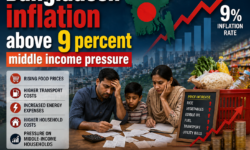
Bangladesh’s headline inflation improved to 8.26% in August 2026 from 9.16% in June, according to Bangladesh Bank. However, the central bank has warned that the improvement does not eliminate underlying inflation risks.
Higher energy prices could reverse some of the progress if they remain elevated for an extended period. Transport operators, manufacturers and logistics companies may face higher operating costs, while businesses could eventually pass part of those costs to consumers.
This creates a difficult policy balance: authorities need to support economic activity while preventing another acceleration in inflation.
Pressure on the Taka and Foreign Exchange
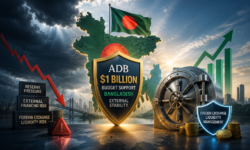
Higher global commodity prices can also increase Bangladesh’s import bill. If the cost of petroleum, LNG and other commodities rises, importers need more foreign currency to settle payments.
Bangladesh Bank’s published spot reference rate was Tk123.1274 per U.S. dollar on 8 October 2026, covering operations until 11:00 a.m. This reference rate is distinct from retail rates or the rate an individual importer receives. However, a prolonged increase in energy prices could increase demand for dollars and put additional pressure on the foreign-exchange market.
A weaker taka would make imported goods and raw materials more expensive, potentially creating another channel for inflation.
What It Means for Businesses in the Bangladesh Economy
Companies with high exposure to fuel, transportation and imported raw materials could see their margins squeezed if costs rise faster than selling prices.
- Manufacturing: Higher energy and logistics costs could raise production expenses.
- Transport and logistics: Fuel costs can directly affect freight and delivery charges.
- Consumer businesses: Higher living costs may reduce discretionary spending.
- Import-dependent companies: Higher dollar demand and commodity prices could increase working-capital requirements.
- Exporters: A relatively competitive exchange rate may support export earnings, although imported inputs can become more expensive.
How Global Bond Yields Reach Bangladesh
Higher U.S. Treasury yields can increase the return investors require from dollar-denominated financing. For a Bangladeshi borrower, the actual cost depends on the loan’s benchmark, credit spread, maturity and whether its rate is fixed or floating. A rise in the 10-year Treasury yield does not automatically produce an equal increase in domestic bank lending rates.
The exchange-rate effect is also conditional. More attractive dollar assets may strengthen global demand for dollars, while Bangladesh’s currency conditions depend on export receipts, remittances, import payments, reserves and central-bank operations. Oil prices and bond yields therefore create risks through different channels; neither alone determines the taka’s direction.
Possible Impact on the Stock Market
Higher interest rates and persistent inflation can create a challenging environment for equities. Investors may demand stronger earnings growth before accepting higher valuation multiples, while companies with significant borrowing costs could face additional pressure.
On the other hand, some sectors may be relatively more resilient if they have strong pricing power, low leverage, stable cash flows or benefit from higher nominal prices.
Investors should therefore focus not only on headline market movements but also on company-level fundamentals, debt exposure, foreign-currency requirements, operating margins and cash flow.
Three Scenarios for the Bangladesh Economy
1. Oil Prices Stabilise
If geopolitical risks ease and energy supplies normalise, oil prices could retreat. This would reduce pressure on import costs and provide Bangladesh with more room to manage inflation and economic growth.
2. Oil Prices Remain Elevated
A prolonged period of high oil prices could keep inflation sticky, increase import costs and place pressure on businesses and consumers. Monetary policy could remain cautious as a result.
3. A Broader Global Shock Develops
If elevated energy prices combine with a deeper global bond sell-off and tighter financial conditions, emerging markets could face stronger capital-flow and currency pressures. Bangladesh would then need to balance foreign-exchange stability, inflation control and economic recovery.
Bangladesh Economy: Indicators Investors Should Watch
For the coming months, investors should closely monitor global crude prices, U.S. Treasury yields, the USD/BDT exchange rate, Bangladesh’s inflation data, private-sector credit growth, import payments and government securities yields.
Bangladesh Bank has kept its policy repo rate at 9.50% while continuing to monitor inflation and economic activity. Government securities also remain an important indicator of domestic funding conditions, with recent Treasury auctions showing yields across different maturities.
Real Estate and Fixed-Income Investments
For property investors, higher construction and financing costs can put pressure on project budgets, while weaker purchasing power can slow sales and rental demand. Those forces can work in opposite directions: a more expensive replacement cost does not guarantee higher resale prices. Location, occupancy, rental cash flow, payment obligations and the time needed to sell remain important.
For fixed-income investors, distinguish a bond’s coupon from its yield to maturity. Existing fixed-rate bond prices generally fall when market yields rise; investors holding to maturity face a different outcome from those selling early. Compare returns after inflation, taxes and fees, and account for liquidity and issuer risk.
The Outlook Depends on Duration and Policy Response
Bangladesh’s economy is not facing a single-source shock. Instead, several pressures are interacting: global energy uncertainty, elevated international bond yields, domestic inflation, exchange-rate sensitivity and weak private-sector credit growth.
If energy markets stabilise, some of these pressures could ease. But if oil prices remain high for an extended period, businesses and investors should prepare for higher operating costs, tighter financial conditions and continued uncertainty around inflation and the taka.
For investors, the key lesson is to remain selective. Companies with strong balance sheets, manageable debt, resilient cash flows and limited exposure to imported cost shocks may be better positioned to navigate the current environment.
Sources: Bangladesh Bank: Quarterly Monetary Policy Statement, October–December 2026; Bangladesh Bank: exchange-rate and policy-rate data, accessed 8 October 2026; Reuters: U.S. Treasury market report, 7 October 2026, republished by AOL. The transmission channels and investment scenarios above are the article’s analysis of these observations.
Featured image: illustrative oil refinery photograph by Maksym Kaharlytskyi on Unsplash; it does not depict a verified Bangladesh facility.
Stay with us for more valuable insights—visit: Click Now.